About the Author:
Aaron Swinton is the Founder and CEO of MAVRK Studio, where he handles business strategy, client partnerships, and the agency’s growth. He has experience in brand building, venture investing, fundraising, and operations, and he uses it to help CPG brands launch and grow.
Most food and beverage founders I meet can tell me their follower count. Fewer can tell me how many people have tasted the product, bought it twice, or asked a local store to stock it. That second set of numbers is what I mean by community. It is also where community growth for food and beverage brands starts.
For a CPG brand launching in 2026, community growth is the system that connects real people to a new product before, during, and after it reaches shelves. It shapes your first 90 days on the Whole Foods shelf and what happens after the first thousands of people taste the product. Over time, it shows up in sell-through, reorders, and how investors value the brand.
This piece is for funded founders and brand managers preparing a launch or relaunch. At MAVRK Studio, community growth is part of our integrated 90-day launch system, and the lessons here come from that work.
What community growth means for a food and beverage brand
Followers watch. A community buys, buys again, and tells other people. The difference matters most in categories where the first purchase is a bet on taste.
Think of a kombucha brand, an RTD coffee, or a frozen meal line. Each one depends on someone trying it, liking it, and finding it again on a crowded shelf. Community growth builds the paths between those moments, from a launch-event guest to a repeat shopper who follows the brand on social media.
Our order of work stays the same: validate the category, define the position, then build community around that position. A community designed before day one on shelf has something specific to gather around. One added after launch often has to figure out what the brand stands for publicly.
Why community work starts before the product hits the shelf
Our 90-day system runs in four phases: foundation, build, pre-launch, and launch. Community planning starts as soon as you define the product and vision, often before the packaging is final. Starting early helps founders avoid costly mistakes in positioning, packaging, and go-to-market strategy.
Roughly, the first month covers foundation, the second covers build, and the final weeks cover pre-launch and launch. Community work runs in parallel with production and packaging. The timeline extends only when a product is complex or production slips.
Many founders run a launch through separate agencies for social, events, PR, and retail. Each can do good work, and the brand still feels different in every channel. We keep strategy, creative, photography, and content under one team in our Brooklyn studio, so people see one brand from the first post to the first tasting.
How Folkland’s farm story built an audience before launch
Foundation is the phase that gives community work something to hold on to. Before we plan a single post, we work with founders on the messaging hierarchy, origin story, founder story, visual toolkit, and brand voice. Our strategists and packaging designers share that groundwork, so the shelf and the feed say the same thing.
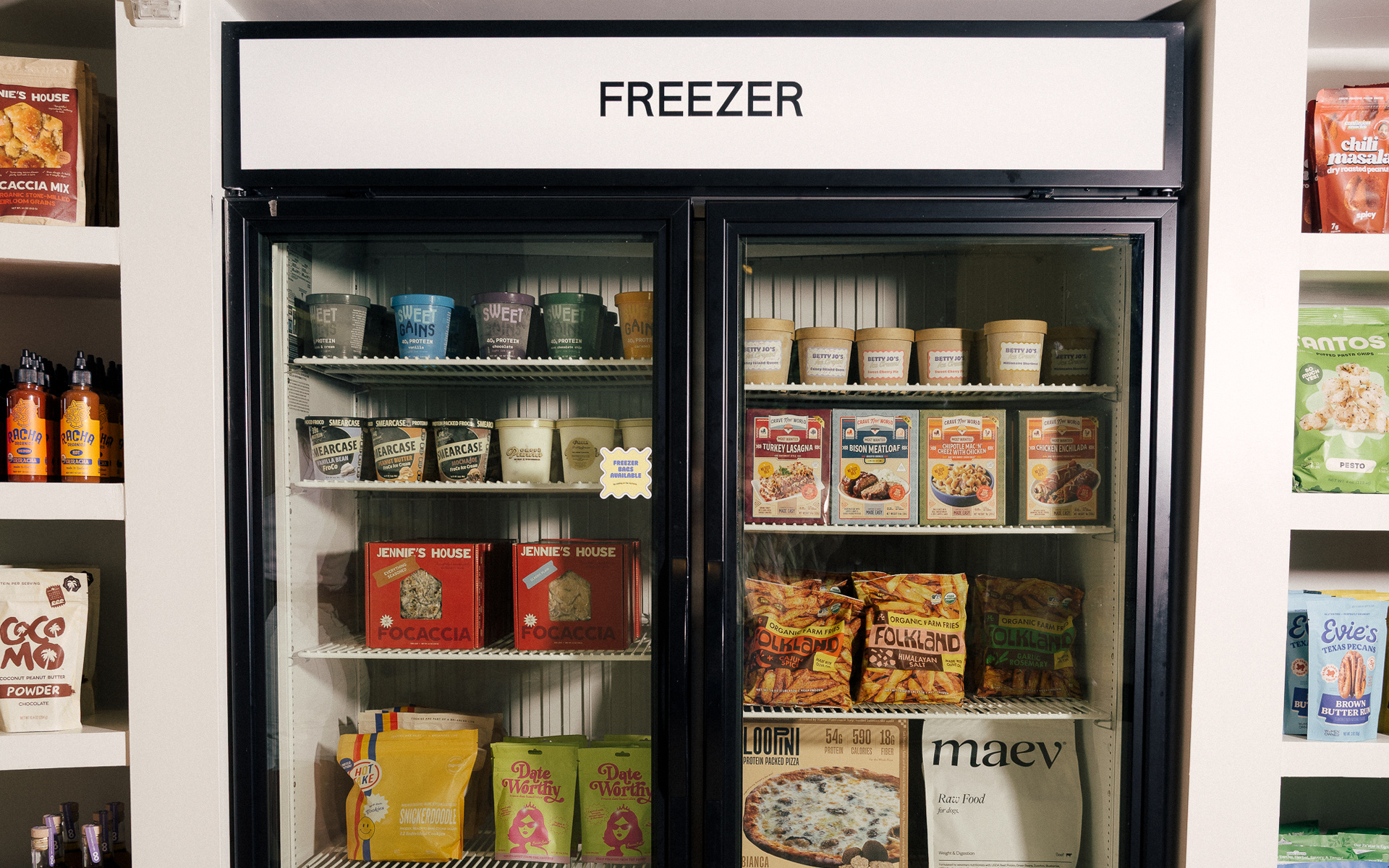
Folkland came to us from a multi-generational family manufacturing business. They had developed a health-conscious French fry but had no defined marketing strategy, and retail expansion was coming. The brand needed to explain why it was different and earn credibility before it reached stores.
We built a story-led social strategy around the farm, the people behind the product, and the journey from potato to shelf. Our work covered social and content strategy, photography and video, community management and the launch campaign. The pre-launch campaign built an initial social audience, and the launch supported Folkland’s rollout across more than 1,100 retail locations.
Clarity on who a product is for and what role it plays in their life guides everything that follows. For Folkland, the farm and the family behind it gave every piece of content a reason to exist.
Building a digital home on the right social media platforms
Even a retail-first CPG brand needs a digital home before launch. Shoppers who spot the product in store look it up, and they should find the same brand they saw on the shelf.
For most food and beverage brands in 2026, we prioritize Instagram, TikTok, and YouTube Shorts. LinkedIn sometimes joins the mix when the brand needs a B2B story for retail buyers and investors. Our brand designers set up a consistent identity across social profiles, a landing page, and a simple ecommerce or pre-order flow.
Owned channels carry as much weight as social. A pre-launch waitlist or a founding members email and SMS list gives the brand people it can reach without an algorithm. A refrigerated beverage might build that list through local pre-order pickups. A shelf-stable snack can open national pre-orders and ship directly.
IRL experiences that turn a tasting into a relationship
People taste food before they trust it, so in-person experiences sit at the center of our community work. A single launch event creates a moment. A planned series of touchpoints creates the repeat visits and repeat purchases a brand needs.
That series can include in-store demos and tastings, founder-hosted pop-ups, collab dinners with local restaurants, and stalls at food festivals or farmers’ markets.
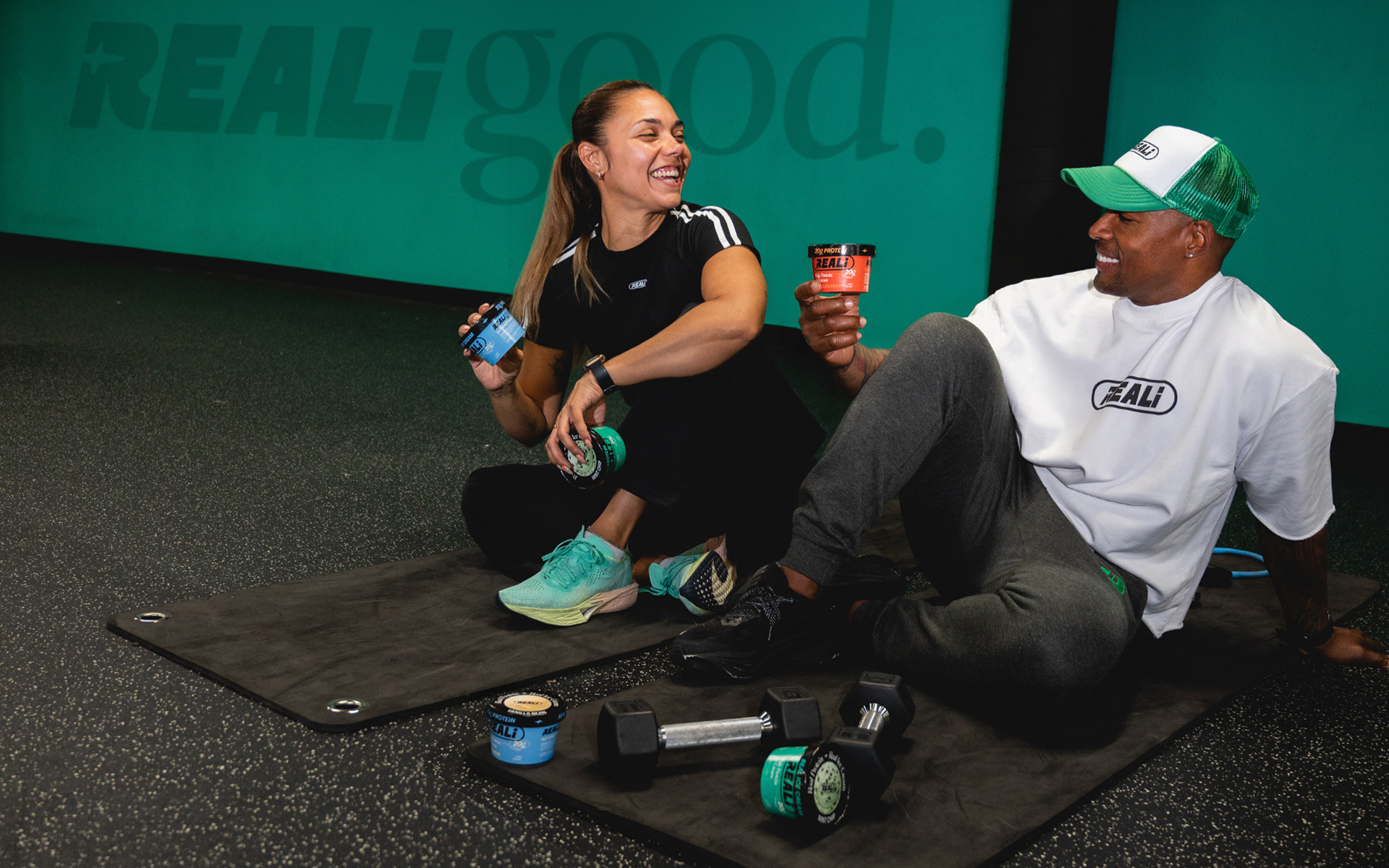
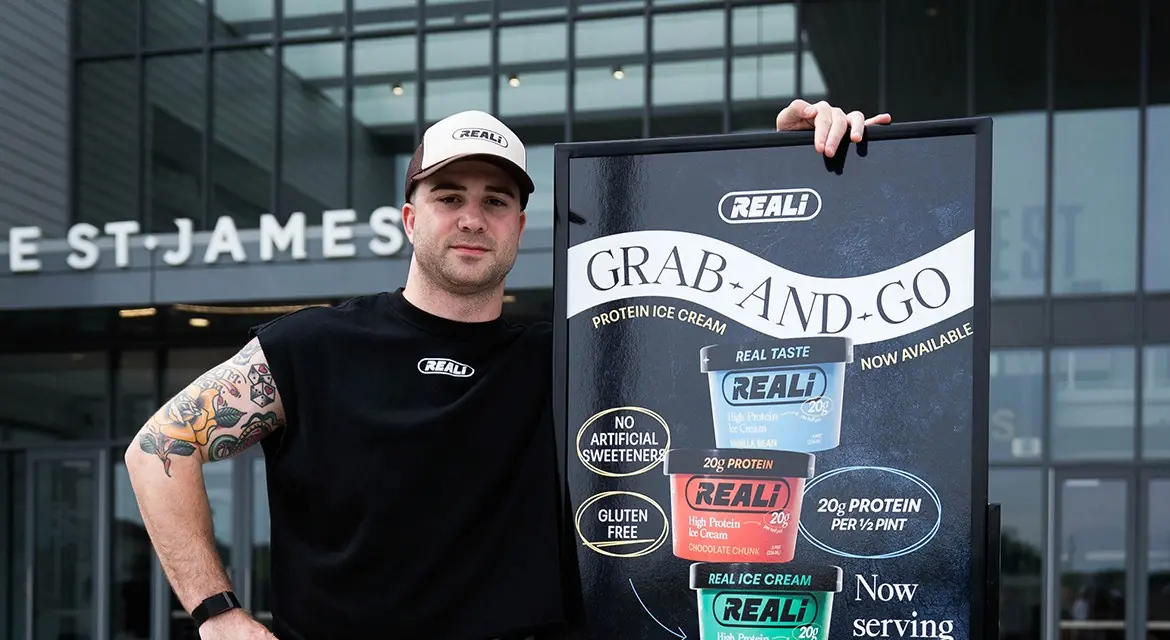
For Reali, a protein ice cream we launched from identity to retail shelf, we brought the product to athletic audiences in person. The brand had to communicate indulgence, protein, and real ingredients without feeling like diet food. Putting a cup in the hands of active people let them taste that proposition directly. Reali entered more than 15 retail locations within two months of launch.
Every in-person moment should feed the digital community. We plan QR codes at demos, SMS opt-ins at events, photo moments, and a branded hashtag before the first sample goes out. A well-captured one-day launch event can provide recap content, fan reposts, and email follow-ups for weeks afterward.
Pointing community at the retail shelf
Getting into retail is hard in 2026, and staying on shelf is harder without people asking for the product. We coordinate community work with retail readiness, including co-packer, distributor, and broker readiness.
Each retailer can become a small community hub. Localized promotions, store staff education, in-aisle signage, and co-branded social posts all point people to a specific shelf. A “Try us at H-E-B in Austin this month” campaign gives followers a clear next step.
A brand that arrives at a buyer meeting with an engaged audience has a stronger case for getting listed and reordered. That audience also gives the product its first shoppers once it is listed.
The first 90 days after launch and the metrics we watch
Launch day is when community work starts in earnest. Launch week brings the event and the first wave of content. Weeks two to four set up a weekly social series and recurring in-store demos. Weeks five to eight add monthly collab events and founder AMAs, and weeks nine to twelve move toward seasonal campaigns.
We review performance throughout that window and adjust content, events, and retail focus as results come in. Engagement, saves, shares, and user-generated content show what resonates on social media platforms. We tie those signals back to samplings, sign-ups and repeat purchases.
On the IRL side, we watch the demo-to-follow ratio, event sign-ups, email and SMS list growth, and sample-to-purchase lift. Sell-through during promotion windows and retailer velocity show whether the community is reaching the shelf. Follower counts come last on that list.
After 90 days, some brands keep growing with us. Others take the system and playbook we built and run it in-house. Either way, the goal is a food and beverage brand with real people around it who keep coming back.
Find more Community stories on our blog Courtside. Have a suggestion? Contact stories@dribbble.com.