


About the Author:
Quincy Samycia is Head of Brand and Growth at The Branded Agency, a branding, creative, website and growth agency working with ambitious companies across Canada, the United States and international markets. He helps organizations connect brand strategy with the creative, digital experiences and marketing systems responsible for measurable growth.
The promise of building a website in an afternoon is easy to appreciate when you run a business. There is always something waiting to be launched, explained or improved, and rarely enough time to give it the attention it deserves. A tool that lets a small team make progress without a lengthy production cycle is worth taking seriously.
I say that as someone who co-founded an agency. I have an obvious interest in the future of creative work, and I think our industry should welcome the pressure to explain its value. Clients are entitled to ask why they should pay for something technology has made easier. “This is how we’ve always done it” is a poor answer.
My reservation is about what we consider finished.
A convincing first version can be valuable. It can help a founder express an idea, give a marketing team something concrete to debate, or get a modest campaign into the market. For some businesses, that may be enough. I would be reluctant to turn a straightforward requirement into an elaborate agency engagement simply because we know how to deliver one.
Why B2B websites need to keep evolving

An established B2B company has a different set of demands. Its website has to represent a business that keeps changing, often through decisions made by people with different priorities. The person approving the brand expression may have little involvement in product claims. The sales team may need evidence that marketing has not yet collected. A technical expert may be the only person qualified to approve a sentence that everyone else thinks sounds perfectly reasonable.
These are ordinary business realities. They tend to become visible just after the launch everyone worked so hard to achieve.
Product marketing needs a page for a new solution. Sales wants a customer story relevant to an unfamiliar industry. The leadership team has refined the company’s position. A campaign deadline is approaching, and the people responsible for the website are trying to accommodate all of it without undoing the work they just approved.
That is where I would start judging the investment. Can the company respond confidently? Does the website make the next decision easier, or does each request reopen the entire project?
The next hundred changes are a useful way to think about it. Some will be trivial. Others will reveal whether the business bought a coherent system or a collection of pages that happened to look coherent on launch day.
A Webflow design system should leave room for change
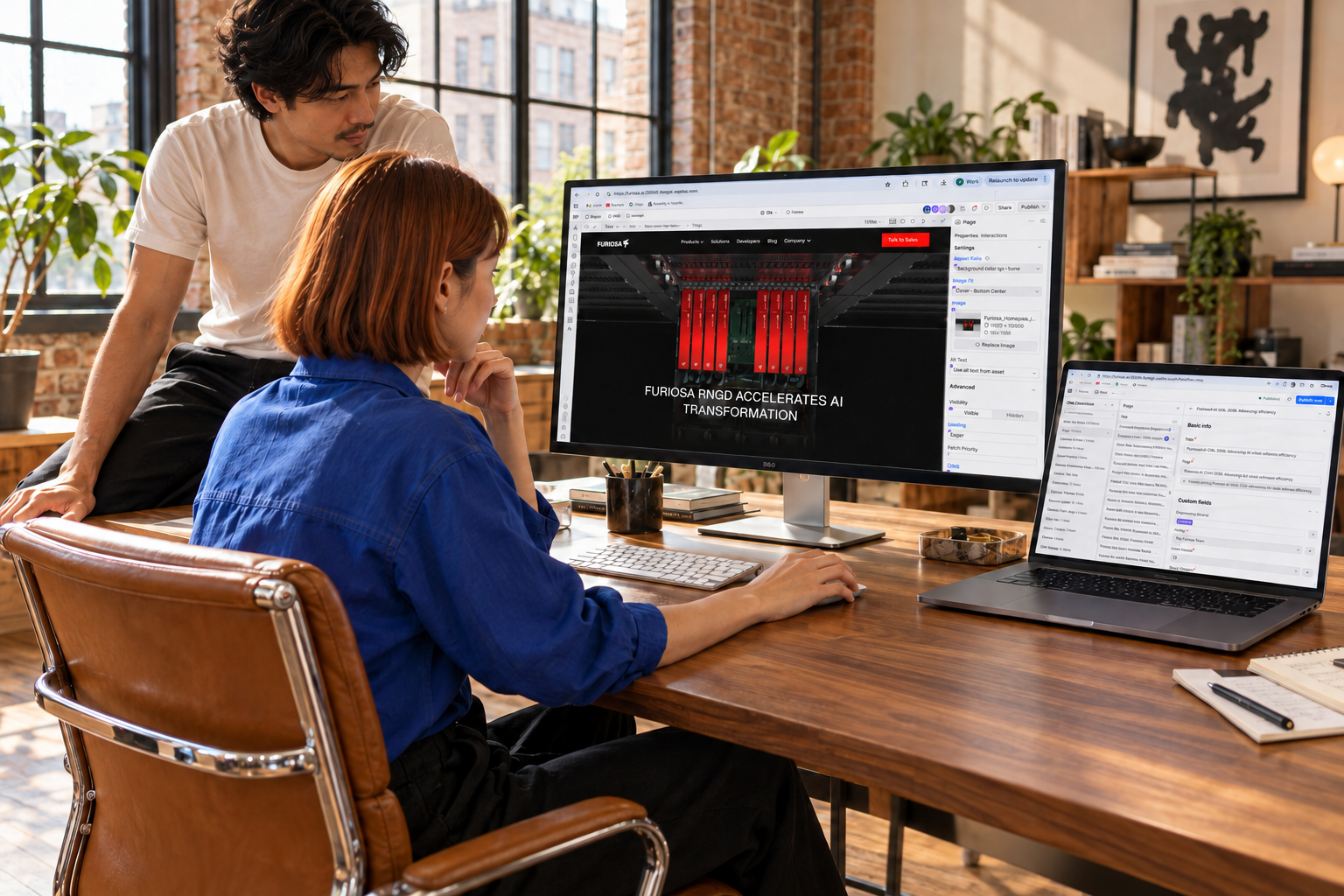
I care about that distinction because good design is valuable precisely when it survives contact with real business needs. A longer headline should not wreck the hierarchy. A technical diagram should have a considered place to live. A page for an engineering evaluator may need more explanation than a page for a finance leader. Both should feel unmistakably like the same company.
Giving a marketing team that flexibility takes judgment. Too little structure creates inconsistency; too much makes every new idea a struggle. There is a point at which protecting the design becomes protecting it from the people it was supposed to help.
That balance is one of the reasons I find Webflow useful. It gives Webflow designers and developers a way to establish a visual system that other people can work within. The quality of the result depends heavily on how that system is designed, how its content is organized, and whether the people inheriting it understand the choices available to them.
A platform can provide the means to work well. The company and its partners still have to decide how they will use them.
Consider a customer story. Publishing it is a relatively small task. Making it useful across the business takes more thought: which industry it belongs to, which product claims it supports, where a prospect should encounter it, and whether sales can find it when a relevant question arises. The most useful development work may be the part that saves someone from making those connections manually every time.
There is a similar judgment involved in deciding what a team should be able to change on its own. Routine publishing should be routine. A new integration, a substantial change to the brand, or a more complex interactive experience may warrant specialist involvement. Independence works best when people understand both their freedom and its limits.
Furiosa’s Webflow migration and the value of a good handoff

Our website design and development work with Furiosa, an AI infrastructure company, is a good illustration. The brief was to migrate its existing website from Craft CMS to Webflow, preserving the experience while creating a more manageable foundation.
We rebuilt the design in Figma, developed a style guide and reusable components, and organized the Webflow CMS for blog posts, careers and newsroom content. The site then went through testing across pages, components and screen sizes. We also delivered three training sessions covering Webflow fundamentals, CMS management and ongoing maintenance.
I think the training deserves attention in that story. It is easy to admire a finished page and overlook what someone needs to know to maintain it six months later. The ambition should be a client team that can use what has been built and knows where to turn when its requirements change.
That raises an uncomfortable question for agencies: how much of the dependence we create is actually necessary?
There will always be work that benefits from specialist expertise. But if a client needs us for every routine edit because the structure is confusing or the handoff was inadequate, I would struggle to describe that as a successful relationship. A strong partnership should make the client more capable. There is plenty of worthwhile work beyond being the only person who knows how the website functions.
AI makes web design faster. Judgment still matters.

AI gives this question more urgency. At The Branded Agency, we use it to support efficient production, and I want clients to benefit from that progress. Faster exploration can give us more room to refine an idea. Less repetitive work can give experienced web designers more time to resolve the difficult parts. Those are practical improvements, provided someone remains responsible for the quality of what leaves the studio.
Creative direction still matters. Some clients have a clear vision and need help realizing it accurately. Others know their current presentation feels wrong but cannot yet describe what would feel right. Generating more options can help either conversation, although it can also prolong a decision when nobody has established what makes one option appropriate.
For me, the human contribution includes listening closely enough to distinguish those situations. It means being able to explain why a design choice serves the business, recognizing when an attractive idea misrepresents the product, and knowing when a client’s hesitation is telling us something we have missed. That work requires attention even when the tools become faster.
Webflow’s recent product announcements are interesting in this context. Its builder updates at Webflow Conf 2026 included visual editing for AI code components and reusable components within CMS rich text. It also introduced Source by Webflow, announced as a limited research preview connecting code, marketing tools and work by people and AI agents.
What interests me about that direction is the prospect of giving more people useful control over the work. I am less persuaded by a demonstration of speed alone. I want to know whether a team can understand the result, refine it and maintain it. The distinction between a capability available today and a product in preview also matters when a business is making a commitment.
Website bottlenecks often start inside the business

There is another side to this that an agency should be honest about. Sometimes the website is waiting on the company.
A campaign can be ready to publish while several stakeholders debate the message. A product page can remain outdated because nobody is responsible for confirming the information. A new tool may remove production work without changing either situation. Leadership still has to decide who owns the decision and how much review it reasonably needs.
This is why I am cautious about treating every slow website process as a technology problem. It might be a poorly built system. It might be an overcomplicated approval process. It might be a perfectly sensible pause to check something that matters. Knowing the difference is part of running the business.
For a company selling complex products or services, the stakes extend beyond publication speed. The website may help a prospect understand an unfamiliar offer, give an internal champion something useful to share, or answer a question that would otherwise delay a sales conversation. A team needs enough control to keep that information relevant and enough discipline to keep it trustworthy.
The everyday work that makes a website valuable

A beautiful launch is worth celebrating. So is the quieter achievement of a marketing team publishing good work without a crisis, a salesperson finding the right evidence, or a new employee understanding how the website is meant to operate.
When I think about the value of a website, I think about those ordinary working days. The business will change its mind, learn something about its customers and pursue an opportunity nobody anticipated in the original brief. Good creative and technical work should leave it better equipped to do that.
AI makes me optimistic about how much easier parts of this work can become. It also makes me more demanding about the choices we make with the time we gain. The next hundred changes will give us a much better answer about the quality of a website than launch day ever could.
Find more Community stories on our blog Courtside. Have a suggestion? Contact stories@dribbble.com.


