

About the Author:
Aaron Swinton is the Founder and CEO of MAVRK Studio, where he handles business strategy, client partnerships, and the agency’s growth. He has experience in brand building, venture investing, fundraising, and operations, and he uses it to help CPG brands launch and grow.
Most consumer packaged goods (CPG) launches don’t last. Somewhere between 70% and 85% fail, and it’s rarely because the product was bad.
More often, the launch itself is the problem. There’s a logo from one shop, packaging from another, a website from a third, and nobody owning the whole picture. Along the way, teams end up testing the new product instead of the consumer need, the category, or the retail plan.
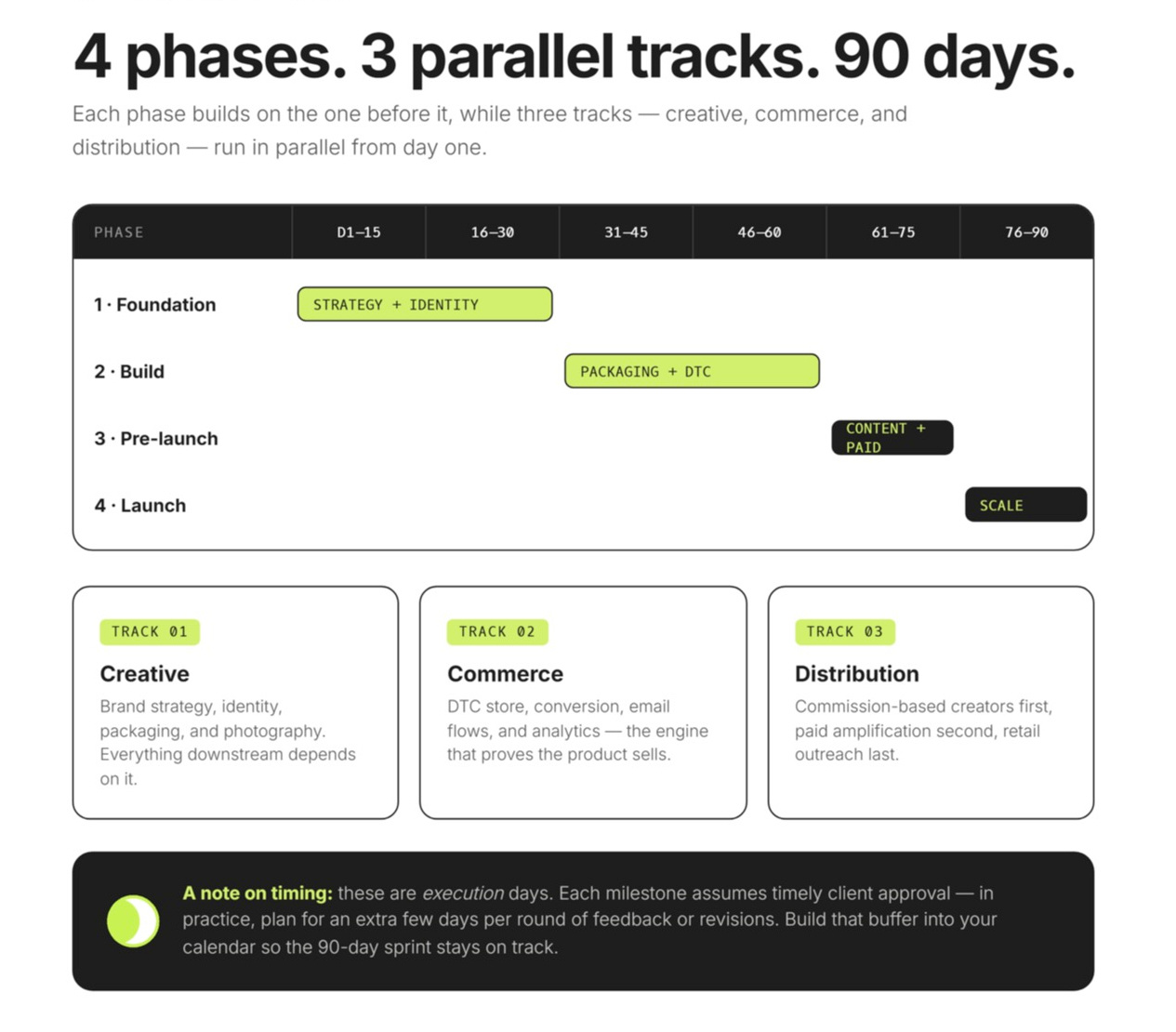
An integrated CPG launch strategy fixes that by lining up product, brand, packaging, eCommerce, and marketing in one plan. That’s the idea behind MAVRK’s 90-day launch system, where Day 90 means “shelf-ready and launch-ready.”
Why Most CPG Launches Fail (and How a 90-Day Plan Fixes It)
- Fragmented vendors: Brand, packaging, and digital are split across separate teams, and nobody owns the whole launch.
The Fix: One team building all three in parallel. - Unvalidated positioning: Design starts before anyone has confirmed demand, price, or the competition.
The Fix: Validate all three before design begins. - Weak execution: Wrong labels, bad dimensions, and missed retailer requirements derail a good product.
The Fix: A week-by-week calendar with owners, approvals, and checkpoints.
One honest note: 90 days is the target, and it assumes timely feedback. Plan a few extra days for each round of revisions.
Inside the 90-Day CPG Launch Plan
Our plan runs on six overlapping workstreams instead of one long list of tasks. Across them, the work moves through four phases: foundation, build, pre-launch, and launch.
- Weeks 1–2, Validate & Position: the product and launch strategy
- Weeks 2–4, Build the Brand: identity and messaging system
- Weeks 3–7, Design for the Shelf: compliant, retail-ready packaging
- Weeks 5–10, Build the Launch Engine: website, eCommerce, email capture
- Weeks 7–11, Create the Content: photo, video, social, launch creative
- Weeks 9–12, Get Shelf & Launch Ready: sales materials and retail readiness
It all lives in a week-by-week calendar with clear owners, approvals, and go/no-go checkpoints. Because the workstreams overlap, packaging and photography can share one creative brief, and creator outreach can start before creative is finished.
Weeks 1–2: Validate and Position
Prove Demand Before You Launch a CPG Brand
Design is the fun part, so it’s tempting to start there. But a CPG product needs category validation first: is the need real, where does the price sit, and who are you up against?
The right research depends on how much the brand has already decided. For a brand with a clear product and launch direction, we review the category, competitors, and audience to sharpen its positioning before design begins. If the opportunity itself is still open, a deeper Opportunity Sprint can come first.
Depending on the scope, that work may include:
- A shelf and competitor review to understand the category and identify gaps
- Customer research and interviews to test assumptions and hear how people describe the need
- An assessment of the audience, differentiation, and best channels for launch
The goal is to make the key decisions early, so the brand, packaging, website, and launch content can move forward with a shared direction.
For instance, take our work for REALI. We redid branding, packaging, web design, social media and directed their go to market into colleges & gyms vs traditional retail. They’ve since gotten into 30+ stores in 5 months.

From Consumer Language to a Clear Promise
Research only helps if it turns into a promise people understand. Your positioning is that bridge, and it shapes everything after it.
A positioning section of your launch plan should include:
- Frame of reference (the category you’re competing in)
- Target consumer
- Key benefit
- Reason to believe
- A promise and brand story in real consumer language
- A one-line concept statement everyone can defend
These decisions ripple into recipe choices, pack size, pricing, channels, and the retail pitch.
Weeks 2–4: Build the Brand
Positioning tells you who the brand is for. Now it needs a look and a voice people recognize.
- Naming exploration, checked for trademark, domain, and social handles early, ideally in week 2
- Logo, color palette, typography, and core visual language
- A brand voice brief: three personality words, plus “we are / we are not”
- A documented brand system: promise, personality, voice, messaging pillars, visual direction
- A brand guidelines doc, even a single page, so every vendor works from the same reference
Weeks 3–7: Design for the Shelf
Packaging, Compliance, and Operations
Plenty of launches stumble at the execution layer: wrong labels, bad dimensions, missed routing guides, or claims that don’t comply.
This phase turns your positioning into a full SKU architecture, label system, and production files.
Your packaging and operations checklist:
- Front-of-pack hierarchy, with a clear benefit
- Nutrition and regulatory compliance
- GTIN/UPC and case pack structure
- Co-packer alignment, lead times, and freight
- Retailer documentation confirmed before launch
A quick shelf test: does it stand out at thumbnail size, and would a creator want to hold it?
Retail-ready doesn’t mean retail-first. Build a few months of online sales (or community) proof before pitching buyers.
Weeks 5–10: Build the Launch Engine
Website, eCommerce, and Email
Even retail-first brands need a strong digital engine for education, storytelling, lead capture, and proof for buyers. In Weeks 5–10, we build a conversion-focused website, eCommerce setup, store locator, and email flows.
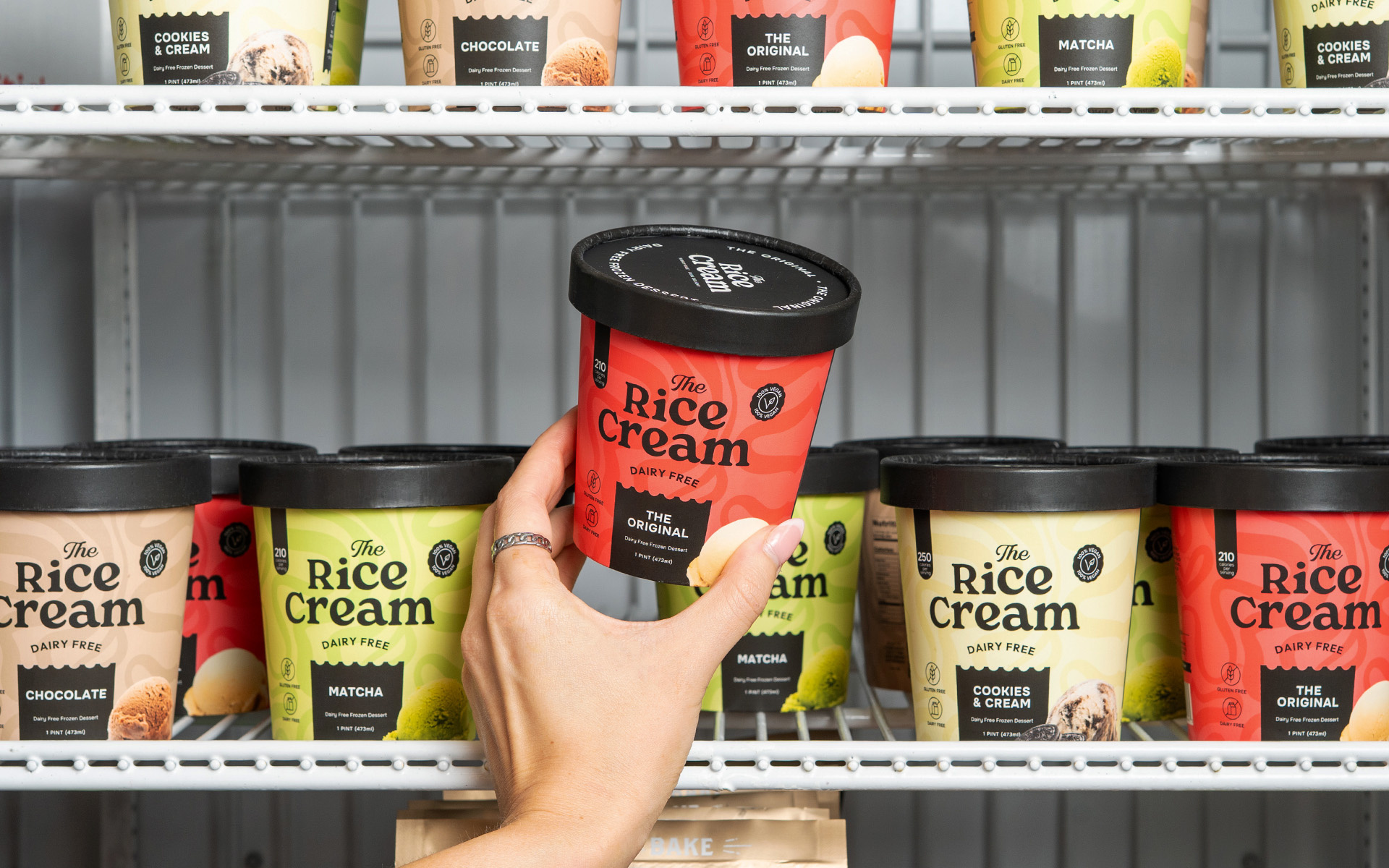
- The Rice Cream: branding, packaging, web design, and launch content built to tell the product story and drive early interest.
- REALI: eCommerce-ready web design and launch messaging aligned with packaging and photo/video.
What your plan should include:
- Landing pages and lead magnets
- A pre-launch waitlist
- Abandoned-cart flows and post-purchase emails
- A pre-launch email list goal of 500+ subscribers
Weeks 7–11: Create the Content
Photo, Video, and Social
Content turns a launch plan from strategy into visible momentum across social, email, and paid channels. In Weeks 7–11, we produce product photography, lifestyle imagery, recipe or usage content, and launch videos.
Folkland’s social launch campaign shows what consistent visuals and storytelling can do.
The Rice Cream and REALI paired photo, video, and social content that matched their packaging and websites.

Map content to each phase:
- Pre-launch: teasers, behind-the-scenes, a countdown series
- Launch: reveal content, how-to clips, UGC prompts, retailer-specific creatives
- Post-launch: put more behind what worked, and feed real customer content and reviews back in
Creators can support each phase of the launch, from early product introductions to launch-day content and customer reviews. Depending on the brand, we may build a broader affiliate program where creators earn a commission on sales, or work with a smaller group of carefully chosen influencers to reach a specific audience.
Weeks 9–12: Get Shelf & Launch Ready
Go-to-Market Execution: Launch Week to Post-Launch
Build your launch calendar across pre-launch, launch, and post-launch, with inventory, media, and in-store support all lined up.
In launch week, point every channel at one clear call to action, concentrate spend in the first 2–4 weeks, and check velocity and feedback daily.
We treat the first 90 days in market as a commercial test, with success metrics and go/no-go or pivot points built into the plan.
Track:
- Velocity: how fast the product sells
- Repeat rate
- ROAS: return on ad spend
- Email opt-ins
When a message or creative performs well, we put more budget behind it and use what we learn to brief the next round of creators. When results are weak, we review the data, adjust the approach, and shift spend toward what’s working.
Alongside the launch, the sales side gets ready with a retail pitch built on your online sales data, plus sales materials and retailer documentation.
Growing After Launch: Community and Revenue
A strong launch strategy connects to a growth plan. It doesn’t stop at Day 90. MAVRK Grow picks up where launch leaves off.
- Community growth: organic social, content, email, creator activation, and IRL activations.
- Revenue growth: paid media, performance creative, and conversion optimization to scale what worked.
Early signals, like top creatives, strongest audiences, and best regions, feed straight into performance campaigns.
Putting It All Together: A 90-Day Checklist
- Days 1–30: validate, position, name, and build your brand identity and guidelines
- Days 31–60: packaging, online store, photography, creator outreach
- Days 61–90: content, email list, ad setup, soft launch, creator launch day, public launch
The steps that prevent failure: validation, coherent branding, retail-ready packaging, a digital launch engine, and aligned marketing. We swap a pile of vendors for one accountable team.
Your next step: audit your current launch plan against this checklist, or sketch your own 90-day roadmap before you talk to designers, agencies, or co-packers.
You can also talk to us about your brand’s starting point and launch goals, and we’ll help you work out what your first 90 days should look like.
Find more Community stories on our blog Courtside. Have a suggestion? Contact stories@dribbble.com.


