

About the Author:
DD.NYC® Creative Director & Managing Partner Anjelika Lours’ Kour specializes in corporate branding, web design, and video storytelling. Beyond working with powerhouse clients, she actively shapes the wider creative industry as a global judge for the International Academy of Digital Arts and Sciences (IADAS) and the Scholastic Art & Writing Awards.
Hiring a real estate web designer for their portfolio without screening for project complexity is an easy trap. You scroll through case studies, land on a beautiful single-property site, and assume they’re the one for you.
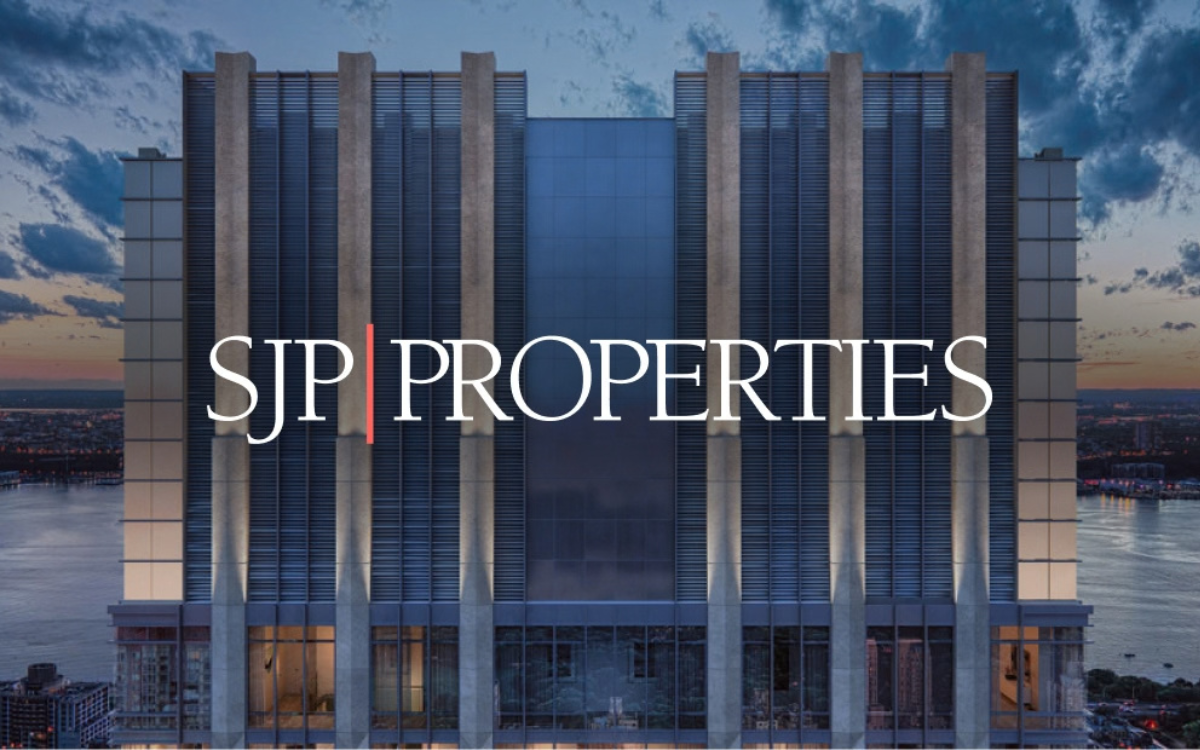
Let me share the challenge we faced with SJP Properties, an NYC real estate developer with more than 40 years in the mixed real estate space, spanning commercial and residential buildings across the metro.
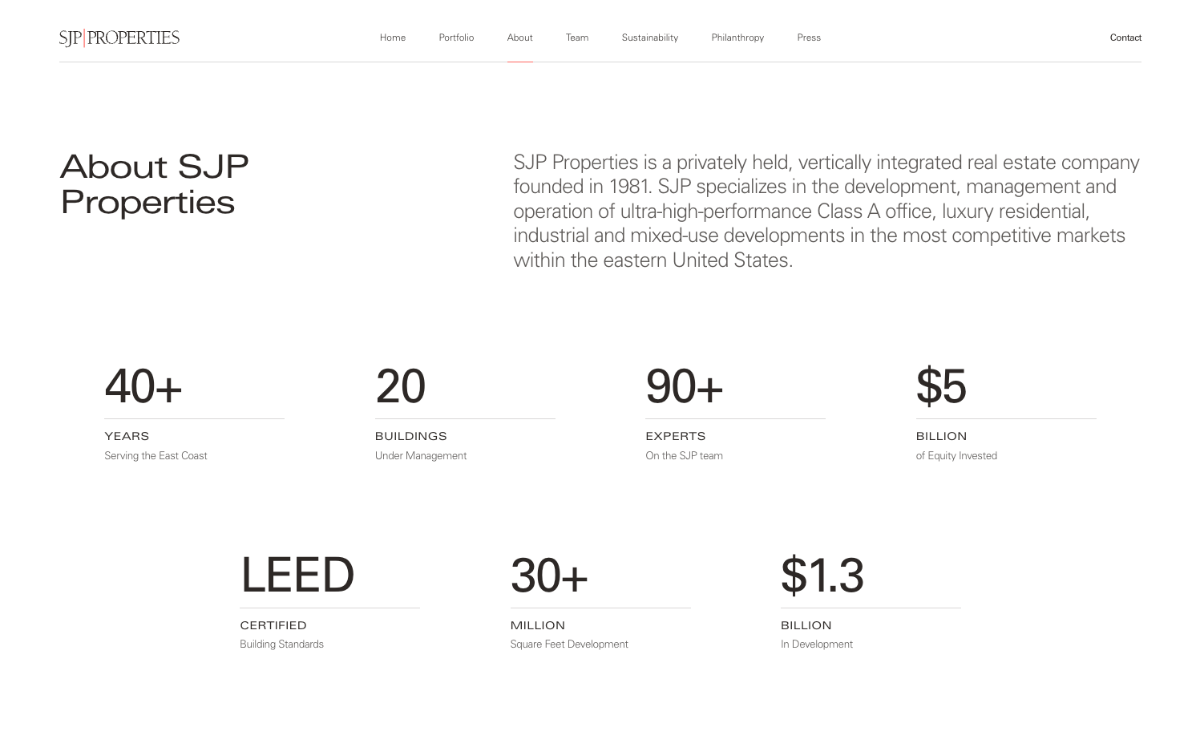
SJP isn’t a single-category business. It’s an established brand with a legacy, an existing logo, and decades of buildings that quite literally shape the Manhattan skyline.
That combination puts a very specific kind of pressure on a web design brief. The client isn’t looking for a revolution. They’re looking for an evolution.
We were brought on for the website design, development, animation and motion graphics for SJP. We had to build something best-in-class, featuring the buildings and the legacy of a well-known developer rather than override it with a design trend.
Here’s what actually separates the web design agencies specializing in real estate from the ones with a nice Instagram feed, based on a successful project.
How to evaluate a real estate web design agency
1. Check their range across property types, instead of focusing on one polished example.
A single gorgeous luxury condo site tells you an agency can execute a mood for a certain audience. It doesn’t tell you what happens when your business lives in more than one address.
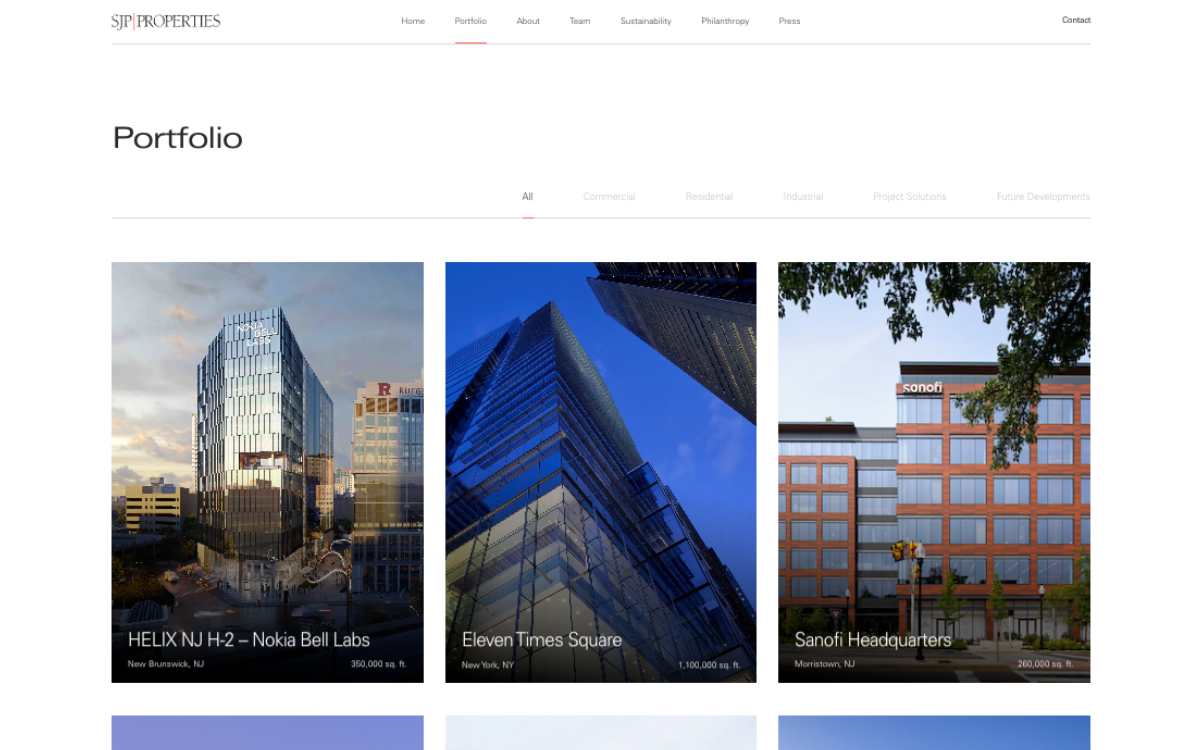
Look at SJP’s profile: office, residential, industrial, and mixed-use. These aren’t visual variations on a theme, they’re different audiences with different expectations. An agency worth hiring should be able to show you they’ve designed for range, not just for polish.
2. Ask how they’d unify a business that doesn’t behave like one category.
Our job for a real estate brand like SJP was to build one system flexible enough to hold an office tower, a luxury residence, and an industrial asset without any of them feeling like an afterthought or a bolt-on.
Ask a prospective agency, “If my business serves more than one audience, how do you keep that from turning into a fractured brand?”
3. Weigh their ambition against usability at scale.
A 40+ year developer with 20 buildings and a multi-billion-dollar portfolio isn’t a project you can approach the way you’d approach a single boutique listing site.
As real estate businesses grow, the build has to hold up under real usage, real content volume, and real institutional stakeholders reviewing it, while still looking like it belongs to a company operating at that level.
If an agency can’t describe how they’d handle that kind of scale, consider your brand goals before signing anything.
4. Find out how they’d evolve an established brand without erasing its equity.
Not every real estate client is starting from zero. SJP already had a logo, a legacy, and decades of buildings that helped define the Manhattan skyline. The job wasn’t to hand them something unrecognizable, but to build something best-in-class that still felt unmistakably like SJP.
If an agency’s answer to “how would you approach an established brand” is indistinguishable from their answer for a brand-new startup, that’s worth noting.
5. Define what “success” looks like before the project starts.
For a single-property site, success might be one clear conversion path. For a company like SJP, success has to mean something broader.
The site launched in 2024, and within days it was ranking on the top pages of search results for multiple non-branded, highly competitive terms, with several sitelinks picked up along the way.
That’s the kind of outcome that’s easy to promise and much harder to deliver. It’s worth asking directly how a prospective agency would define and measure success before the project starts, not after it launches.
What makes an effective real estate web design portfolio
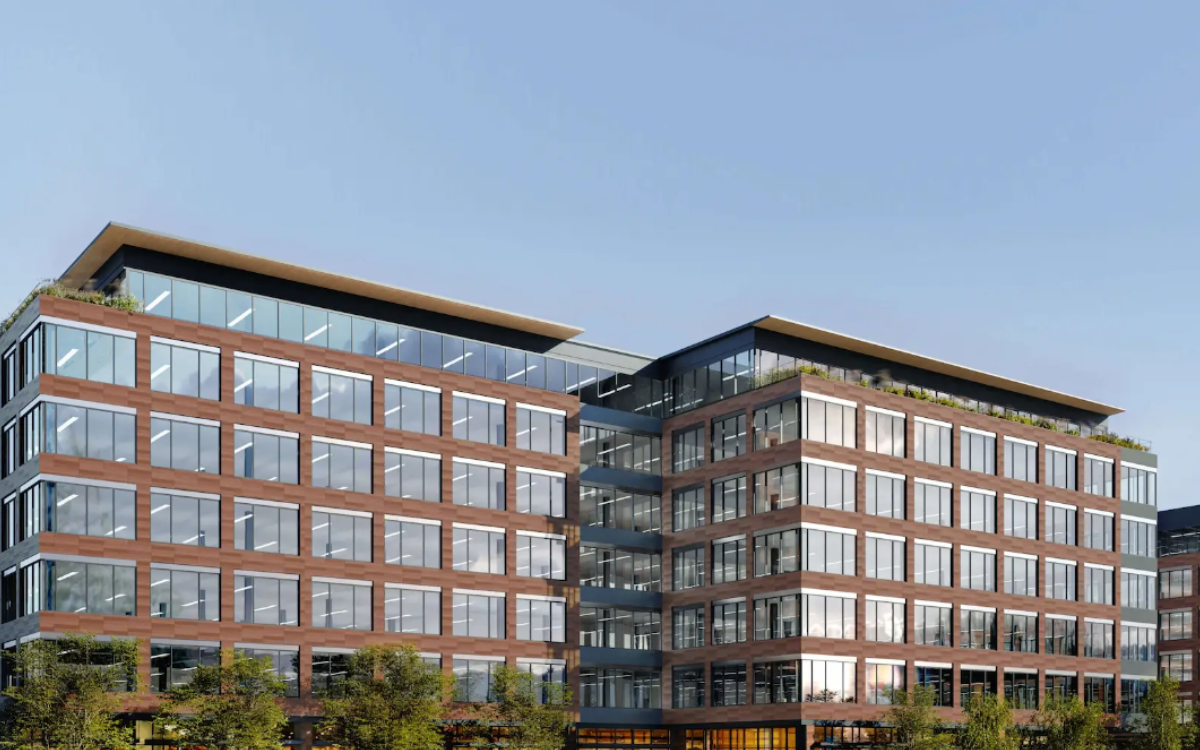
Look for signs of systems-thinking over single-project polish. Does their work suggest they can hold a brand together across multiple offerings, or does every project look like a standalone exercise in making one thing pretty?
A web design portfolio that only proves an agency can nail one mood is a narrower asset than it looks like at first glance, especially if your business doesn’t fit neatly into one category, typical of real estate projects.

Range matters in real estate
Real estate businesses are rarely one thing, and they’re rarely starting from a blank page either. The agency that’s actually right for you is the one that can prove they’ve handled that kind of complexity before, and that they know the difference between evolving a legacy and erasing one.
And if you’re a web designer or agency reading this, it’s worth asking yourself the same questions before you pitch: can you show range, not just polish? Can you evolve a real estate brand instead of overriding it? Knowing these could help you win projects in the real estate industry.
Find more Community stories on our blog Courtside. Have a suggestion? Contact stories@dribbble.com.


