About the Author:
Unfold Founder & Creative Director Eddie Lobanovskiy builds high-impact brand identities and UI/UX ecosystems at the intersection of classical design and AI innovation. Designer of the XRP logo.
Here’s a secret nobody tells you about designing for a company the size of Facebook: the actual design part barely changes. You still poke at a problem, sketch some ideas, make something good, get roasted in feedback, and fix it. Same steps whether it’s two people in a garage or twenty thousand people in a skyscraper.
What changes is everything wrapped around the design. That’s the part that turns you into an actual enterprise design agency instead of just a design agency that got lucky once.
At a startup, you talk straight to the founder. They like it, it ships, everyone goes home happy. At a giant company, your one contact answers to a boss, who answers to leadership, who answers to legal, who answers to brand, who answers to a stakeholder nobody has ever met but who somehow still gets a vote. It’s less “get feedback” and more “survive a group chat with forty people in it, three of whom are typing right now and none of whom agree.”
Here’s the welcome package once designing for large companies enters the chat:
- Onboarding that makes airport security look chill: NDAs, background checks, insurance you didn’t know existed
- Procurement approval before you’re even allowed to say hi
- A parade of stakeholders reviewing your work like it’s a jury trial
- Formal presentations where you defend a color choice like it’s a doctoral thesis
- Feedback from five departments that all disagree with each other, sometimes in the same email
- Approval timelines measured in seasons, not days
Some Fortune 500 companies won’t even talk to you until you’re inside their procurement system, and getting in there can take weeks or months. Annoying? Extremely. But once you’re in, you’re in. That approval usually cracks open years of work across the whole company, not just one project.
Here’s what six very different clients taught us about it.
The hard part isn’t the design. It’s getting through the door.

We worked with Facebook on Libra, their crypto initiative. Before we designed a single pixel, we had to clear an onboarding process so strict it felt like joining a secret society, insurance requirements and all. Once we were through the gate, the actual work felt almost quiet by comparison. It’s high-level mobile app thinking, iconography, and some genuinely fun custom illustration with a small team on their side.
You’re not just designing screens. You’re designing for two audiences at once.
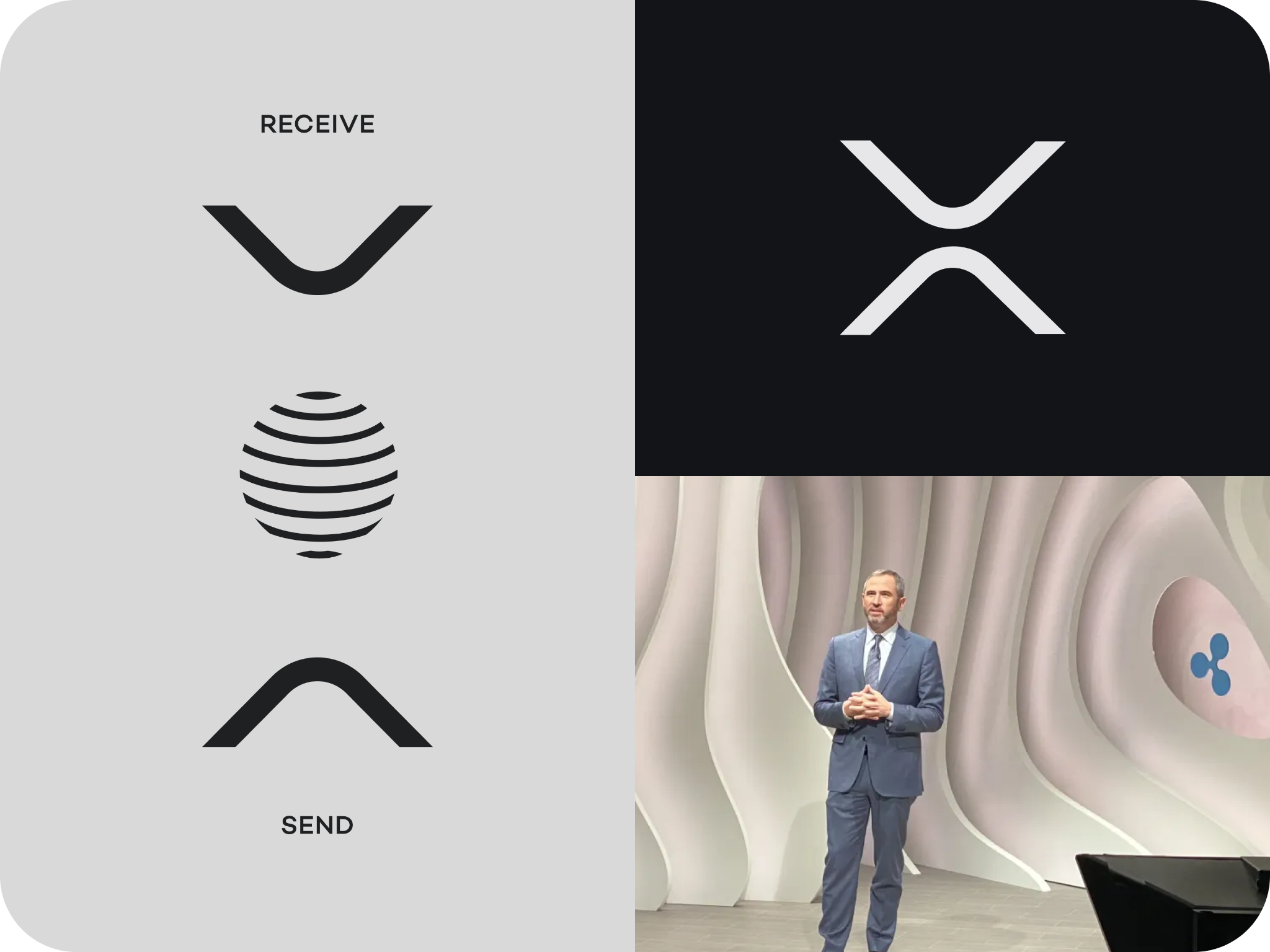
Ripple cranked the difficulty up another notch with bigger liability requirements, bigger onboarding lift. But the work matched the ambition: XRP branding, website and digital experiences, marketing collateral, event and stage design, and a lot of big, visionary thinking about where the whole thing was headed.
Projects like this stretch what “design partner” even means. You’re not just handing over files. You’re designing for the end user, sure—but also for your internal contact, who has to walk into a room full of executives who’ve never seen your work and explain why it’s right. Helping them win that argument is half the job.
The fewer people between you and the decision-maker, the faster everything moves.

Rumble was the opposite ride. We joined when they were still small. We had a direct line to the founder, a tight-knit team, and decisions that happened in days instead of quarters. Over time we touched nearly the whole platform: Logo & brand, the main website, mobile apps, TV apps, UX, marketing, basically the entire video-streaming universe.
Watching a company grow up while you’re sitting in the room is a wildly different experience than walking into one that’s already enormous. And it keeps proving the same rule: fewer layers, faster work. Every time.
When things get bigger, they don’t have to get crazy.
We got into Solana early too. We built something we loved but couldn’t have predicted would get this big. Years later, when we came back around, there were naturally more people and more moving parts, but nothing about it felt like starting over.
We’ve since done website work, marketing, iconography, illustration, campaigns, trade-show booths, 3D renders, and pitch decks for them. Basically, anything the crypto ecosystem could throw at us. Good proof that a process can scale up without turning into a completely different beast.
Clear the paperwork once, and every department starts showing up.

Merck sits at the far end of the spectrum from Solana and Rumble. As a massive global pharma company, their vendor onboarding was the kind of thorough that makes you double-check your own paperwork twice. Outside partners have to get formally verified before anyone’s even allowed to say hello.
It’s a real climb. But once we cleared it, the payoff was an ongoing relationship across app and mobile design, custom illustration, 3D graphics, and logo work for internal initiatives and sub-brands. The best part: once you’re a trusted, approved vendor, teams you’ve never met start finding you. The boring part is already handled, and the trust is already banked.
Big brands live on more than one level at a time.

Lamar handed us a broader brand challenge. We evolved their logo, visual identity, and brand guidelines, rebuilt their website and the whole experience around discovering and booking billboard ads, and worked on marketing and billboard creative promoting Lamar itself.
The fun puzzle here was juggling three versions of the same brand at once: the corporate identity, the digital customer experience, and physical billboards you drive past on the highway.
A few more things worth knowing.
Your contact usually isn’t the final decision-maker. A startup founder can approve something in one meeting. At a big company, someone you’ve never even met might have veto power, and you won’t find out until round four.
Contradictory feedback doesn’t mean doing everything literally. With enough stakeholders, comments will clash with each other. Your job is to find the actual worry hiding underneath the comment and fix that, not rubber-stamp every note like a Xerox machine.
One clear project owner changes everything. Twenty stakeholders is fine. Twenty stakeholders who all think they’re the decision-maker is how projects quietly die.
So what does it actually take to be an enterprise design agency?
Here’s the big misconception: that designing for a massive company needs a totally different creative process. It doesn’t. The fundamentals hold up exactly the same whether you’re two people in a garage or a Fortune 500 name with its own zip code. The actual skill is learning to navigate everything around the design: the people, the process, the permission slips.
Trust compounds. Good work matters, obviously. But so does being reliable, easy to reach, and easy to work with. Earn that trust once, and one project quietly turns into years of work across industries.
Find more Community stories on our blog Courtside. Have a suggestion? Contact stories@dribbble.com.