About the Author:
Diana Hlevnjak brings over 20 years of experience in graphic design, branding, and illustration. Her Master’s degree in Fine Arts continues to inform her approach to visual communication, blending artistic exploration with practical design thinking. Her work spans branding, packaging, game design, and illustration, always centered on building cohesive, thoughtful visual systems across digital and print media.
One of the most frustrating things about being a designer is realizing that some of your best work is the work you cannot show.
I’ve been in that position more than once.
You can spend months working on a brand identity, solving problems, refining details, and collaborating with clients and other teams to make something that you are genuinely proud of. You know how much thought went into it. You know how many decisions were made along the way.

And then the project launches, and you can’t share it.
Sometimes, all you have is a folder sitting on your computer that contains work you know is some of your strongest.
For designers who have been working professionally for many years, this becomes a familiar problem. The more established you become, the more likely you are to encounter confidentiality agreements, private projects, unreleased products, or work that simply isn’t yours to make public.
For a long time, I thought of this as a disadvantage.

Eventually, I started looking at it differently.
Your portfolio doesn’t have to be a complete archive of everything you’ve ever created. It needs to communicate how you think, what you’re capable of, and the kind of work you want to do.
1. Rethink what your portfolio is for.
You see another designer posting a beautiful client project and think, I have work like that too, I just can’t show it.
But I’ve learned that comparing portfolios this way isn’t particularly useful.
What you see on someone’s portfolio is not necessarily the full picture of their career. It is the small percentage of their work that they are able and willing to publish.
That’s an important distinction.
A portfolio is a curated representation of your experience, skills, taste, and direction. It doesn’t need to contain every project you’ve ever worked on.
In fact, it shouldn’t.

2. Make self-initiated work a part of your practice.
My earlier school years in graphic design had an even bigger influence on the way I approach design than I realized at the time.
A lot of our assignments were essentially fabricated client projects.
We would receive a conceptual brief and treat it as if a real client had walked through the door. I remember working on things like branding for a fictional hotel chain that needed to feel connected as one brand while still having its own character and appeal for different destinations and audiences.
There was no real client behind the brief. No real company. No budget or business waiting for us to deliver.
But we still had to make the idea work.

We had to think about the audience, the story, the visual identity, and how everything would come together as a complete concept.
Looking back, some of those projects were probably pretty ambitious for a teenager. But I remember how much fun they were. There was something exciting about being given a problem and having complete freedom to decide where it could go.
That experience stayed with me.
I remember one of my professors telling us that he didn’t feel right if he went a whole week without drawing or designing something. He constantly needed to doodle, explore an idea, or make something new.
I didn’t think much of it. But the older I get, the more I understand exactly what he meant.
I have that same need to create.

As a freelancer, there are naturally periods when I don’t have a client project to work on. I could simply take that time off, but quite often I find myself opening Illustrator and starting something anyway.
A brand idea. An illustration. A packaging concept. A logo that has been sitting in my head.
Not because someone asked me to make it.
Not even necessarily because I need another project for my portfolio.
I just feel the need to make something.
Self-initiated projects have remained such an important part of my practice.They aren’t simply a way to fill gaps in my portfolio. For me, they are part of being a designer.

3. Give your concept work the same rigor as client work.
Conceptual work gives me the freedom to explore ideas that I may not have had the opportunity to explore in client work. I can experiment with a visual language, build a more complete identity, or explore a particular industry simply because I find it interesting.

The important thing is to treat the project seriously.
Don’t create a logo and stop there.
Build a brand.
Give it a reason to exist. Develop the typography, colour palette, visual language, applications, and story. Think about how it would actually behave in the real world.
When you do that, the project stops feeling like a random design exercise and starts becoming a demonstration of your capabilities.

The goal isn’t to prove that you spent a lot of time on the project.
It’s to show that there was thought behind the work.

4. Create the kind of work you want to be hired for.
This is probably one of the most useful things about having the freedom to create conceptual projects.
You get to decide what you want your portfolio to say about you.
If you want to work with premium food brands, you can create packaging projects that demonstrate that direction.
If you want to attract lifestyle or fashion clients, you can build identities that feel at home in those industries.
If illustration is an important part of your practice, you can create a brand where illustration isn’t just an extra element but an essential part of the identity.
I’ve found that this is especially useful when the work you have done professionally doesn’t fully represent the direction you want to take next.
Your portfolio doesn’t only have to document your past.
It can help shape your future.

5. Don’t underestimate the work you can’t show.
Just because a project isn’t in your portfolio doesn’t mean the experience you gained from it doesn’t count.
The years spent solving problems, presenting ideas, working with clients, handling feedback, making compromises, defending creative decisions, and figuring out what actually works—all of that stays with you.
A portfolio can’t show all of it. And maybe it shouldn’t have to.
Sometimes I look at my portfolio and know that some of the projects I’m most proud of aren’t there. But that doesn’t make those projects any less important to my career.
They influenced how I work today.
They made me better at solving problems.
They taught me things that eventually found their way into other projects.
And in a way, that is the point.
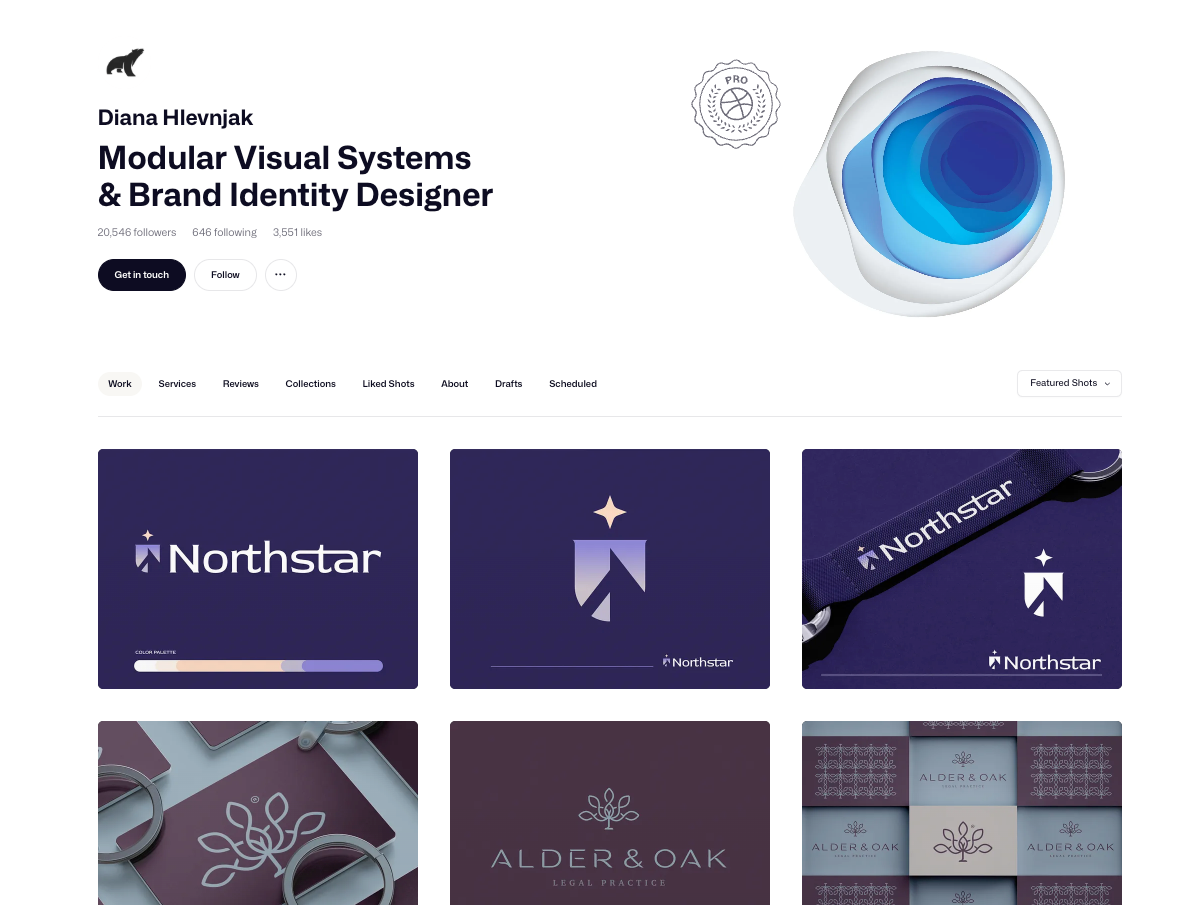
Your portfolio is not proof of everything you’ve done. It’s a window into what you can do.
So if some of your strongest work is hidden behind an NDA, don’t let that stop you from building a portfolio you’re proud of.
Show what you can.
Create what you can’t show.
Explain how you think.
And use your portfolio not only to document where you’ve been, but to communicate where you’re going next.
Find more Community stories on our blog Courtside. Have a suggestion? Contact stories@dribbble.com.