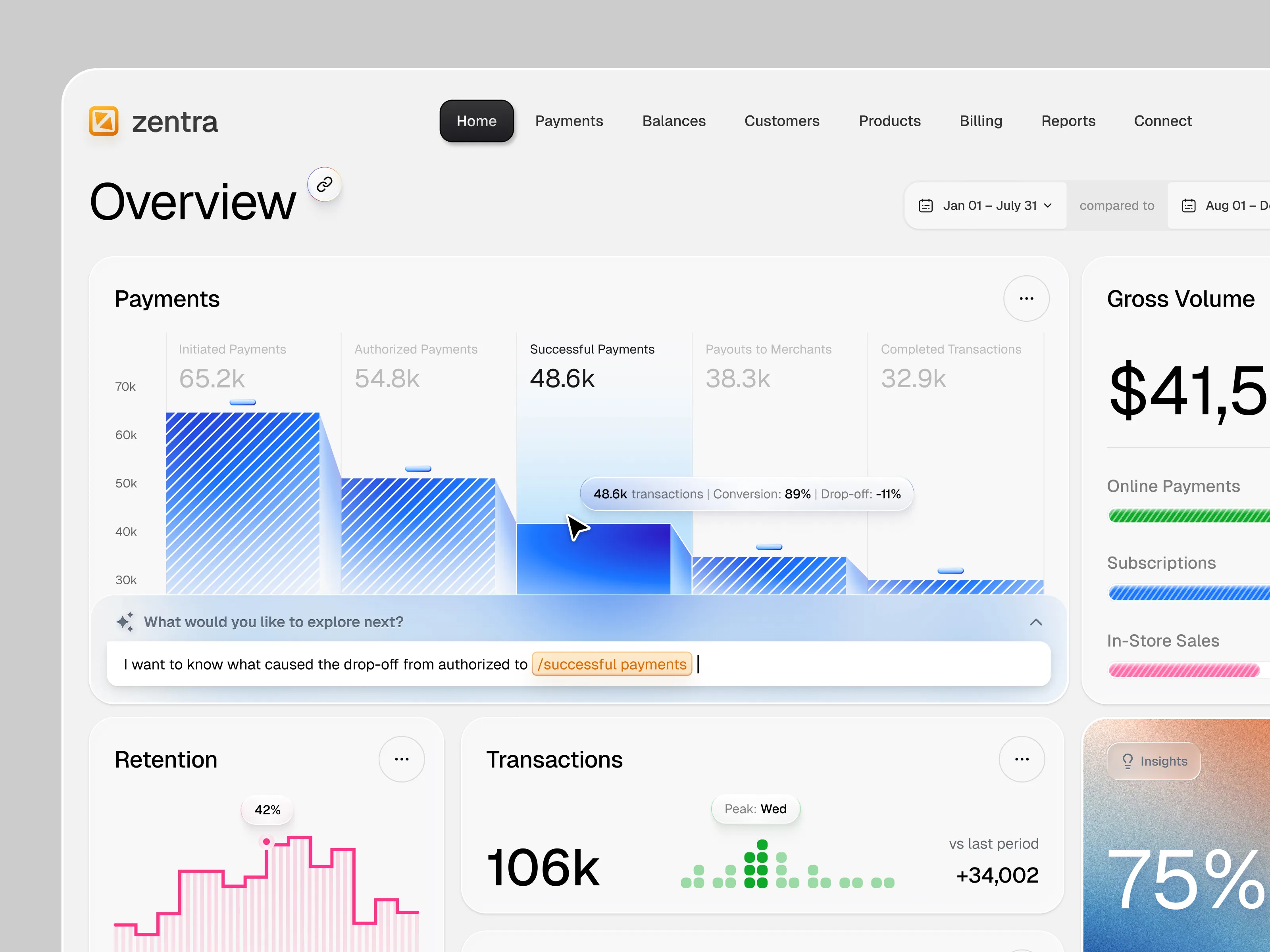
A UI/UX design agency portfolio is more than a gallery of final designs; it is a window into an agency’s strategic thinking. Our guide provides a set of evaluation criteria ensuring you hire a team that can move your business metrics, not just polish your interface.

Dribbble
Written by Dribbble
Last updated
When hiring UI/UX talent, you’re investing in a problem solver, a strategist, a collaborator, and a product thinker. A well-crafted UI/UX design agency portfolio should show how the team thoughtfully defines and frames problems, conducts meaningful user research, and iterates intelligently on design solutions, resulting in measurable impact.
Our expert guide can help you make confident, informed business decisions and transform your hiring needs into a smart business investment. By the end, you’ll have a clear framework to score, compare, and hire UI/UX agencies that make your digital products look good and work better.
Table of Contents
What a Strong UI/UX Portfolio Should Communicate
A strong UI/UX portfolio signals more than aesthetic skill; it hints at the designer’s ability to move your product forward, improve conversions, reduce friction, and delight users. A portfolio that stands out typically conveys three core elements:
1. Process
Good design isn’t surface‑level; it’s strategic. A portfolio should show how a design agency arrived at solutions, not just what the final screens look like. It should outline research, ideation, prototyping, and testing. These are clear signs of whether the agency is methodical, collaborative, and accountable.
2. User‑Centered Thinking
Strong portfolios demonstrate empathy: understanding real user needs and solving real problems, not just applying concurrent trends. Design should meet user needs through research, testing, and iteration. Look for work where design choices clearly address challenges, showing strategic thinking alongside creativity.
3. Business Impact
Design decisions should tie back to measurable results, such as improved conversions, retention, and engagement, to name a few. If a portfolio lacks evidence of impact, it’s a red flag.
The Importance of First Impressions
When reviewing a UI/UX portfolio, you’ll be able to come to some sort of early judgment within the first 30–60 seconds. And it mostly boils down to:
- Is the landing page clean and easy to scan?
- Do project titles communicate value (e.g., “Improving Signup Conversion for SaaS App”) instead of generic names (“Project 1,2”)?
- Is the navigation intuitive or overloaded with examples?
- Is there a short, clear bio explaining the designer’s role and strengths?
The human brain processes visual information quickly. If a portfolio feels cluttered or confusing at first glance, it lowers expectations even before deeper evaluation starts. Even small details, such as alignment, spacing, and micro-interactions, all define exceptional design. A polished portfolio shows a designer who values both usability and aesthetics.
Criteria 1: Problem Definition & Research
A portfolio that only displays polished screens is one of the biggest red flags. Exceptional UI/UX agencies use case studies to tell the full story of their work, from identifying the problem to delivering results. A strong case study should showcase:
Problem Definition
Every project begins with a clear understanding of the challenge. Good case studies answer questions such as:
- What was the actual problem the design aimed to solve?
- Who were the target users, and what were their needs or pain points?
- Which business goals did the project support?
This section demonstrates that the user experience design company can align user needs with business objectives, rather than just creating attractive screens. Without this, designs risk being aesthetically pleasing but ineffective in practice.
User & Market Research
Research is the foundation of informed design decisions. Look for evidence that the agency conducted:
- User interviews, surveys, or contextual inquiries
- Competitive analysis to understand industry patterns and gaps
Analytics review to identify pain points or areas for improvement
Designs developed without research are often opinion-driven rather than data-guided, making them less likely to solve real user problems or meet business goals.
Criteria 2: Design Process & Iteration
Ideation and Prototyping
Strong portfolios show the evolution of ideas, not just final screens. This includes:
- Sketches, wireframes, or low-fidelity mockups
- Early interactive prototypes
- Iterative design changes based on feedback or testing
UX design is rarely linear. Exceptional UI/UX design agencies showcase the non-linear loop of hypothesis → test → learn → refine → retest.
Portfolios that skip iteration often hide the messy but critical work of refining solutions, masking weaknesses in process or decision-making.
Criteria 3: Visual Execution & Accessibility
Great UI/UX design balances form and function. Alas, visuals shouldn’t be overlooked, despite our emphasizing the usability, coherence, and strategic execution.
Consistency and Style
Consistent colors, typography, and layouts instill trust and clarity. A portfolio that demonstrates a coherent design system shows that the user interface design agency can deliver professional, reliable experiences. While every agency has a unique aesthetic, it’s important to check if their style aligns with your brand—but also remain open to originality. Memorable work with inventive layouts and thoughtful compositions can strengthen brand identity and demonstrate fresh perspectives.
Key Evaluation Areas
- Visual Consistency
- Is there a design system in place?
- Do buttons, forms, and navigation behave predictably?
Inconsistent UI frustrates users and increases development costs. A portfolio demonstrating visual consistency signals a designer who understands system thinking and attention to detail.
- Accessibility Considerations
- Does the design account for color contrast, keyboard navigation, scalable text, and screen-reader compatibility? Accessibility isn’t optional. Top portfolios show explicit decisions that make the product more inclusive and usable for all users.
- Responsive & Multi-Device Thinking
- Was the design created for both desktop and mobile?
- Were breakpoints and layout adjustments considered deliberately?
Mobile screens often reveal hidden UX challenges. Ignoring responsiveness indicates a lack of readiness for modern design demands.
Criteria 4: Measurable Impact
Essentially, you want to work with design agencies that measure results. Their portfolios should answer questions like:
- “What metrics are tracked?”
- “Why are those metrics chosen?”
- “How did the data influence future iterations?”
UI/UX design agencies that test, measure, and refine are more likely to deliver impact. Some of the most reliable metrics when measuring the success of a UI/UX project include:
- Task Success Rate: Users complete key tasks more easily after the redesign.
- Example: “After the new flow, 85% of users completed the checkout process vs. 63% previously.”
- Conversion Improvements: Design improvements that drive growth matters.
- Example: “Signup conversion increased by 28% after simplifying user onboarding.”
- Time‑On‑Task Reduction: Efficient flows lower user frustration.
- Example: “Time to complete profile setup dropped from 4.5 minutes to 2 minutes.”
- Retention or Engagement Metrics: Measuring long‑term behavior shows UX value beyond first use.
- Example: “Daily active users (DAU) increased 12% after redesign.”
Criteria 5: Collaboration & Communication
Most successful products are the result of collaboration between designers, product managers, engineers, researchers, marketers, and business stakeholders.
Great design agencies can translate complex ideas into clear, actionable insights for both technical and non-technical audiences. They explain their reasoning, defend design decisions with evidence, and adapt when new constraints arise.
Signs of Strong Collaboration
Look for evidence where the UI/UX design company shares:
- How they partnered with product managers to align user needs with business priorities
- How they presented and justified design decisions to stakeholders using research or data
- How they collaborated with engineers to ensure feasibility and smooth implementation
- How they resolved conflicts or constraints, such as technical limitations or tight deadlines
This context shows whether the agency can function as a team contributor and problem-solver, not just an isolated creative.
Communication of Design Intent
Another important aspect of collaboration is how design agencies communicate their ideas and decisions. Clear communication prevents misunderstandings, accelerates development, and ensures the final product matches the original vision.
Good portfolios often include artifacts that demonstrate how they communicate their thinking, such as:
- Design proposals or concept presentations explaining strategic choices
- User research reports summarizing findings and insights
- Design handoff documentation, including specifications and component guides
- UX decision logs that track why certain changes were made
These materials show that the agency can document its process, align with stakeholders, and support smooth implementation.
Scoring Framework for Evaluating A UI/UX Design Agency Portfolio
To make portfolio review systematic:
| Evaluation Criteria | What It Measures | Weight |
| Problem definition & research | Real UX thinking | 25% |
| Design process & iteration | Methodology depth | 25% |
| Visual execution & accessibility | Quality of UI | 20% |
| Measurable impact | Business outcomes | 20% |
| Communication & collaboration | Workplace value | 10% |
Score each category on a scale (e.g., 1–5), then systematically compare candidates’ portfolios. This UI/UX portfolio checklist prevents subjective hiring decisions.
Final Thoughts on What To Look For In A UI/UX Design Agency Portfolio
A portfolio is often treated as the ultimate proof of a designer’s capability, but in reality, it’s only a snapshot of how someone chooses to present their work. Any potential hiring decision should be made only after portfolios are used as a starting point for deeper conversations, not as the final verdict.
A thoughtful portfolio review should therefore lead to questions such as:
- How would this UI/UX design agency approach our specific product challenges?
- Do their examples suggest adaptability, or only success in familiar contexts?
- Can they explain their decisions clearly when pressed beyond the written case study?
The best among them didn’t succeed because of a single brilliant interface, but because they can continuously learn, adapt, and collaborate within evolving environments. The strongest ones are those who demonstrate curiosity, humility, and a willingness to refine their ideas when new insights appear.
You can find these agencies on Dribbble or send us your Project Brief, and we’ll InstantMatch you with UI/UX agencies that fit your requirements.
Written by Dribbble
Last updated