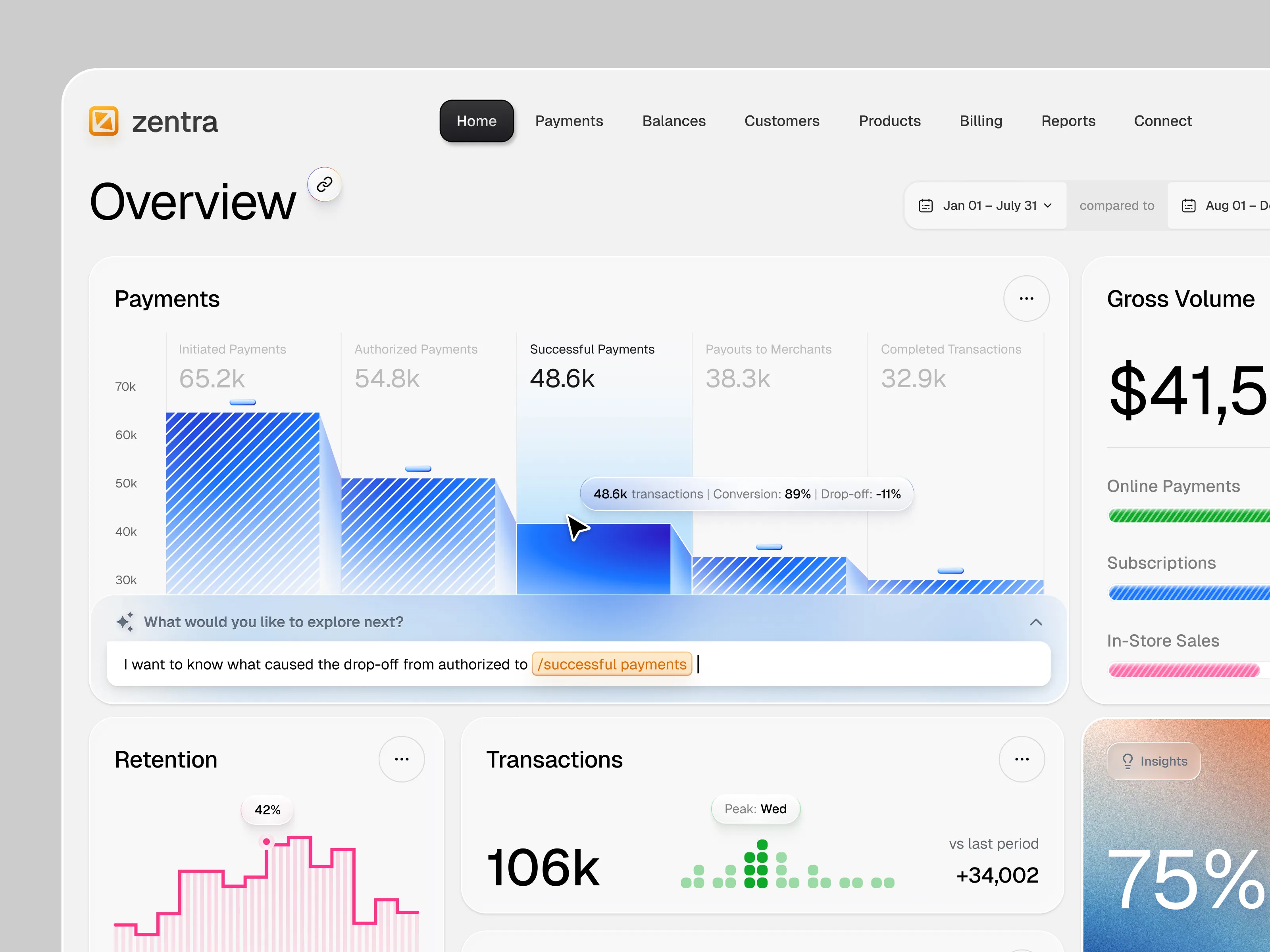
About this Service
UITOP redesigns existing B2B SaaS and enterprise software when the product has grown beyond its original UX structure.
New modules, user roles, workflows, data, and business rules can gradually change how a product needs to work. Navigation becomes harder to maintain, similar actions behave differently across modules, tables and forms accumulate edge cases, and older interface patterns stop supporting current product requirements.
We start with the product that already exists. We review its critical workflows, information architecture, navigation, user roles, interface patterns, product states, and the parts of the current experience that users already understand.
The redesign can focus on one high-priority workflow, a legacy module, navigation and product structure, a design system, or a broader product experience.
UITOP then redesigns the selected areas around the current product logic, business rules, and user tasks. The final design defines updated workflows, interaction patterns, product states, reusable components, and implementation details for engineering.
What You Get
UX review of the existing product
Current workflow and product-structure analysis
Prioritized redesign scope
User-flow and workflow redesign
Information architecture and navigation restructuring
Redesign of high-priority modules and screens
Dashboard, table, form, filter, search, and detail-view improvements
Role and permission-aware interaction updates where relevant
Empty, loading, error, permission, and exception states
Updated interaction patterns across related workflows
Interactive Figma prototypes for redesigned scenarios
New or updated component library and design system
Responsive behavior for relevant product workflows
Developer-ready specifications and handoff support
Products We Redesign
B2B SaaS platforms
Enterprise software
Legacy web applications
ERP systems
CRM products
Operations software
Workflow management platforms
Admin and internal tools
Analytics and reporting products
Data-heavy applications
Multi-role software
Industry-specific B2B products
When a B2B Product may need a redesign
New modules no longer fit the original navigation
Users move through several screens to complete one operational task
Similar actions behave differently across modules
Product roles have grown but the interface still treats users the same way
Tables, filters, forms, and detail views follow inconsistent patterns
Important states or exceptions are difficult to recognize
Older components no longer support current workflows
Teams maintain several versions of the same interaction pattern
New features create more product inconsistency each time they are added
Experienced users rely on workarounds outside the intended workflow
The design system no longer reflects what engineering is building
Existing Workflows Matter
A mature B2B product often has users who already know how to complete important tasks.
During redesign, we identify which interaction patterns are creating friction and which ones carry useful familiarity, workflow knowledge, or operational meaning.
This helps the team change the structure that no longer works while keeping important product behavior understandable for existing users.
Redesign Can Start With One Critical Area
A full product redesign is not always the right first scope. The engagement can begin with:
one high-friction workflow;
navigation and information architecture;
a legacy product module;
dashboards and operational tables;
a complex form or approval process;
a role-specific workspace;
an outdated component system;
or a broader product-wide redesign.
We define the scope based on product risk, user impact, implementation dependencies, and what the team needs to improve first.
How We Work
1. Existing Product Review: We review the current product, high-priority workflows, user roles, product structure, component patterns, and available evidence such as analytics, support feedback, or research.
2. Redesign Scope: We identify the areas that need structural change and define what should remain stable for existing users.
3. Workflow & Structure Redesign: We update navigation, information architecture, user flows, interaction patterns, and product states for the selected scope.
4. Interface & System Design: The redesigned workflows are developed into high-fidelity product screens and reusable component patterns.
5. Prototype & Engineering Handoff: Key scenarios are reviewed in prototype form where useful, then documented with states, responsive behavior, and implementation details for engineering.
What You Can Expect
Existing-product context: We work from the product that already exists, including its workflows, users, product logic, and technical constraints.
Prioritized redesign scope: The project starts with the workflows and modules that create the most important product problems.
Workflow-level changes: Redesign decisions cover product behavior, states, information structure, and interaction patterns, not only visual styling.
Reusable product patterns: Updated components and interaction rules give product and engineering teams a consistent basis for future work.
Engineering collaboration: Interaction states, component behavior, responsive rules, and implementation details are prepared for the team building the redesigned product.
Direct communication: You work directly with the designers responsible for the project throughout the engagement.
Tools
Figma for product redesign, prototypes, component systems, and developer specifications.
Claude and other AI-assisted tools where useful for workflow analysis, research synthesis, and functional exploration.
Analytics, support, research, and documentation tools already used by your team can be included in the review.
Slack, Google Meet, Zoom, or your existing collaboration environment for communication.
If your product already has a design system or engineering environment, we work with the existing system.
Experience With Complex Existing Products
UITOP works with B2B products where new modules, roles, operational data, and workflows have accumulated over time.
Our redesign work can include ERP and CRM products, logistics and operations software, financial products, construction platforms, healthcare software, and other data-heavy systems.
We review the relationships between current workflows, business records, users, interface patterns, and implementation constraints before defining the redesign scope.
Working with a B2B product that has outgrown its current UX? Share the product or the workflows you want to improve, and we can define a redesign scope around the areas that need structural change.