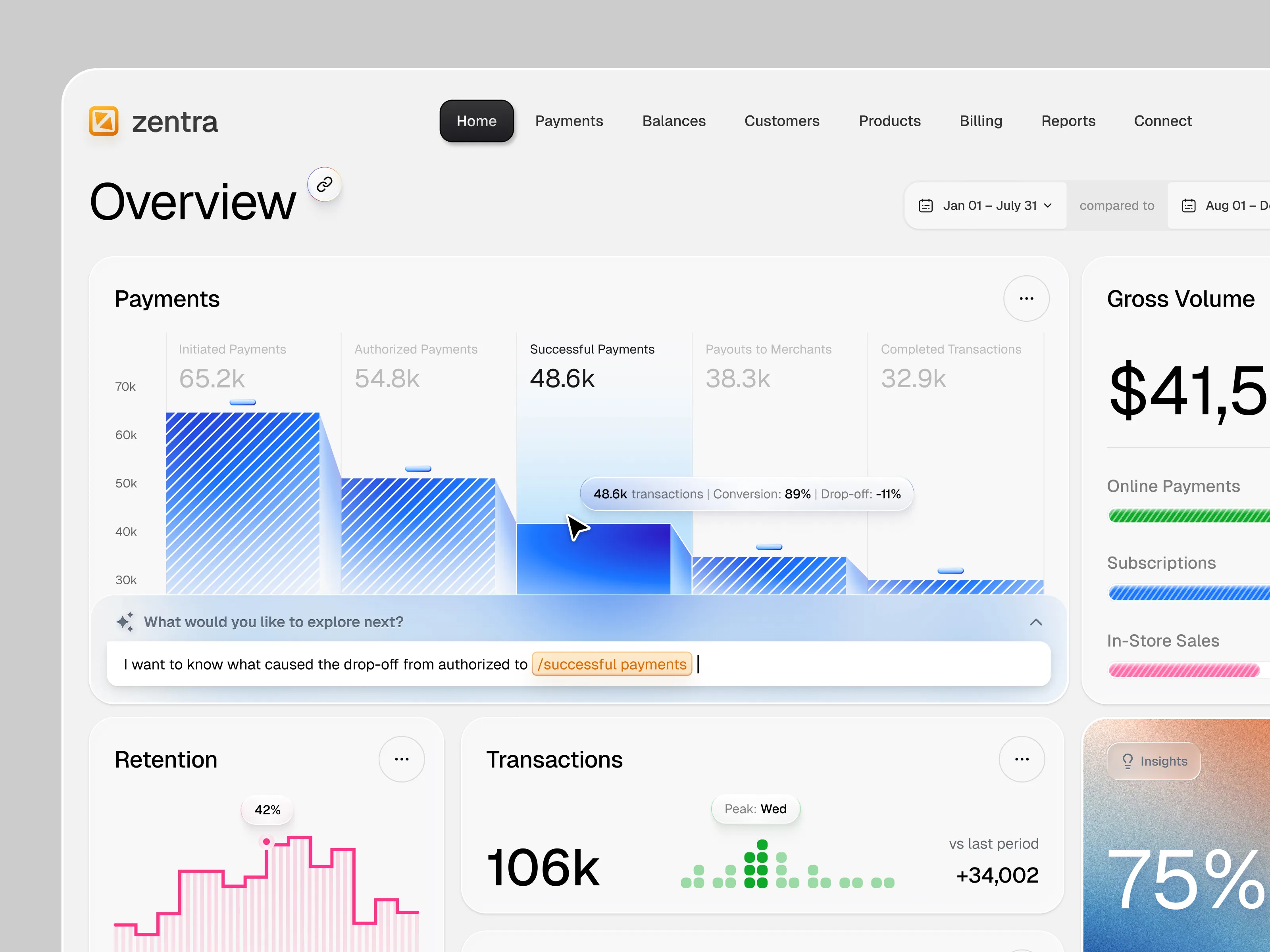
Scalable design, proven ROI, and risk-reducing processes are precisely why you need a UI/UX design agency. In this guide, our experts break down the six strategic reasons to partner with one and how it protects your long-term growth.

Dribbble
Written by Dribbble
Last updated
Regardless of how innovative your idea is or how robust your product is, if your users struggle to navigate your interface, they’ll leave, and they’ll do it fast, never to be seen again.
This is why you need a UI/UX design agency. By bringing specialized expertise, design strategy, research-backed methodologies, and user-centered thinking, these agencies transform ideas into intuitive, engaging, and scalable digital experiences.
Here, we’ll break down the benefits of hiring a UI/UX design company and how it can be one of the most important strategic investments you can make for your business.
Table of Contents
Understanding UI and UX: A Foundation
Before we dive deeper into why UI/UX agencies are essential for your business, let’s clarify the distinction between UI and UX, because confusion here is common.
UX (User Experience) focuses on how a product works. It examines the journey users take from start to finish, considering usability, accessibility, efficiency, and satisfaction. UX design ensures that interactions are smooth, intuitive, and aligned with user needs.
UI (User Interface) is about how a product looks. It includes visual design elements like layout, typography, color schemes, icons, and interactive components. A compelling UI makes the product aesthetically appealing, consistent, and aligned with your brand identity.
Together, UI and UX form the backbone of any digital product. While UI attracts users, UX ensures they stay, engage, and convert. Hiring a UI/UX design agency ensures these two critical aspects work in harmony to deliver measurable results.
Reason 1: Access to Specialized Expertise Across Multiple Disciplines
A UI/UX agency is a group of multidisciplinary specialists with deep expertise across user research, interface design, interaction design, visual design, content strategy, and front-end development. Unlike a single designer or an in-house team that may have a limited scope, agencies bring together professionals with specialized knowledge to ensure every aspect of your product is addressed with expert precision.
- Experience across industries
- Agencies work on a variety of products—from e-commerce apps to enterprise dashboards. Their broad exposure equips them to anticipate user needs, avoid common pitfalls, and implement best practices.
- Process-driven design
- Agencies follow structured methodologies, like Design Thinking or Agile UX, to guide every decision. This ensures solutions are both creative and data-informed, reducing costly post-launch iterations.
- Expanded research and validation capabilities
- Established agencies rely on mature research practices such as user interviews, journey mapping, heuristic evaluations, and usability testing. This leads to more evidence-based design decisions, minimizing assumptions and improving overall product effectiveness.
- Expertise in adjacent UX disciplines
- Beyond core UI and UX design, agencies often incorporate information architecture, accessibility standards, usability testing, and conversion-focused UX strategy. This holistic perspective ensures the product is not only visually polished but also intuitive, inclusive, and performance-driven.
- Continuous exposure to tools, trends, and standards
- Agencies consistently work with evolving design systems, prototyping tools, accessibility guidelines, and emerging UX patterns. This ongoing industry exposure helps deliver modern, scalable, and future-proof solutions aligned with current best practices.
Reason 2: Objective and Unbiased Perspective and Feedback
Internal teams can become too familiar with a product, making it difficult to identify usability gaps or think creatively about solutions. A UI/UX design agency offers an objective, external perspective.
- Unbiased evaluation
- Agencies assess your product without emotional attachment, acting as user advocates to ensure design decisions are grounded in actual user behavior and research rather than internal preferences or assumptions.
- Data-informed feedback
- Designs are tested with real users, uncovering issues that internal teams may overlook.
- Validation through testing
- From A/B tests to usability studies, agencies rely on both quantitative and qualitative insights to refine the user experience.
- Cross-industry innovation
- As mentioned previously, these experts are exposed to multiple industries, which allows them to introduce novel approaches, often transposing ideas from other domains that internal teams might not consider.
- Strategic alignment across user, technical, and business goals
- Without internal bias or assumptions, agencies can more effectively balance user needs, technical feasibility, and business objectives—leading to clearer prioritization and more rational product decisions.
- Ability to challenge the status quo
- As external partners, user interface design agencies can question ingrained patterns, uncover normalized friction points, and recommend improvements that internal teams may overlook.
The creative advantage
Fresh ideas from an agency often spark innovative solutions for complex design challenges. They combine research insights with creative thinking to improve user flow, visual hierarchy, and interactive elements, resulting in a product that feels both intuitive and delightful.
Reason 3: Scalability, Efficiency, and Flexibility
One of the most overlooked benefits of a UI/UX design agency is scalability. As projects grow or timelines shift, agencies can adapt resources and workflows without sacrificing quality.
- Variable talent pools
- Agencies maintain teams of designers, researchers, and developers that can be reallocated based on project requirements. Whether you need extra UI designers for a mobile app or UX researchers for usability testing, agencies can expand or downsize resources accordingly.
- Quick turnaround times
- Experienced agencies understand deadlines and have processes optimized for efficiency, reducing bottlenecks and ensuring timely delivery.
- Cost-effectiveness
- Hiring an agency is often more economical than expanding an in-house team. Agencies handle overhead, training, and tooling, providing flexible access to high-level skills without long-term commitments.
- Seamless scaling from MVP to full product evolution
- Agencies support products at every growth stage—from early MVP validation to full-scale product expansion—quickly introducing specialists or adjusting workflows without disrupting momentum.
- Operational maturity and project governance
- Established agencies use defined project management frameworks, resource planning systems, and cross-functional coordination to manage multiple initiatives while maintaining consistent quality and communication.
- Reduced strain on internal teams
- By augmenting internal capabilities during peak workloads, agencies allow in-house product and engineering teams to focus on core priorities, preventing burnout and maintaining productivity.
- Improved collaboration with development teams
- Agencies work closely with engineering teams to ensure design feasibility and technical alignment from the outset, reducing rework, shortening feedback loops, and accelerating time-to-market.
Reason 4: Proven, Process-Driven Design Methodologies That Reduce Risk
A key benefit of hiring a UI/UX agency is its use of structured, research-driven methodologies. Agencies do not rely on guesswork; they follow systematic frameworks, ensuring that every choice aligns with both user needs and business objectives, minimizing risk and maximizing the potential for success.
Structured, Multi-Stage Approach
Agencies employ a multi-stage design process that typically includes:
- User and market research
- Interviews, surveys, data analytics, and competitor analysis uncover user motivations and market opportunities, helping shape informed design strategies.
- UX audits
- Agencies evaluate existing products against usability standards (e.g., Nielsen heuristics, ADA compliance) to identify friction points, confusing navigation, and accessibility gaps.
- Defining personas and journey maps
- Mapping target users and their interactions ensures designs reflect real-world behaviors and priorities.
- Wireframing and prototyping
- Low- and high-fidelity interactive models validate ideas early, test user flows, and simulate functionality before development.
- Visual design and high-fidelity mockups
- Cohesive interfaces align with brand identity while enhancing usability and engagement.
- Usability testing and iterative refinement
- Observing real users, A/B testing, and surveys confirm design effectiveness and uncover areas for improvement.
Each stage is guided by research and best practices, ensuring that decisions are deliberate, evidence-based, and focused on delivering meaningful experiences.
Consultancy and Strategic Alignment
Beyond execution, agencies act as UX consultants, aligning design with business goals and product feasibility. By building a shared vision upfront, they prevent costly missteps, reduce post-launch redesigns, and ensure every decision is strategic. This alignment also protects against user frustration. Studies show that 88% of users won’t return after poor UX, and post-launch fixes increase both development and design costs.
Data-Driven Validation
Agencies leverage data at every step:
- Prototyping and testing validate user flows, interface functionality, and content hierarchy.
- User and market research uncovers gaps competitors miss and informs product decisions.
- UX audits identify friction points and accessibility issues, guiding actionable improvements.
By validating decisions before full-scale implementation, agencies reduce the risk of product failure and enhance the chances of creating intuitive, engaging, and conversion-friendly experiences.
Delivering Tangible Outcomes
The outcome of this systematic approach is a product that is:
- Aligned with user expectations and behaviors
- Consistent across devices and interactions
- Designed to minimize friction and maximize engagement
- Informed by research, trends, and best practices
With agencies translating research into actionable strategies, your product avoids common pitfalls, improves usability, and provides experiences that delight users while supporting business objectives.
Reason 5: Engagement, Conversion, and ROI Through Expert Design
Users form immediate judgments about credibility, usability, and trust based on design. A confusing or inconsistent interface can frustrate users and drive them away, while an intuitive, visually cohesive design encourages engagement, satisfaction, and repeat interactions.
UI/UX design agencies specialize in translating business goals into user-centered interactions. This focused approach delivers outcomes that matter: increased engagement, smoother journeys, and higher conversion rates.
How agencies enhance engagement and conversion
- By mapping every interaction and reducing friction, agencies make products easier to navigate, ensuring users stay longer and return more often.
- Thoughtful visual design, consistent branding, and micro-interactions create products that feel polished and professional, increasing trust and perceived value.
- Inclusive design ensures that a wider audience can interact effectively, expanding reach and customer satisfaction.
- Clear calls to action, intuitive navigation, and structured flows guide users effortlessly toward desired actions, boosting conversion.
- Strategic UX design improves site architecture, navigation, and usability, signaling quality to search engines and increasing the likelihood of higher rankings and greater organic traffic.
Maximizing ROI through professional design
Agencies contribute to ROI by:
- Reducing errors and post-launch fixes
- Increasing engagement and retention
- Accelerating time-to-market
- Continuous, data-driven optimization
Research supports the value of professional UX: Forrester finds that every $1 invested in UX can return $50–$100, making design a measurable driver of revenue, customer satisfaction, and growth.
Reason 6: Future-Proof, Adaptable Design Solutions
Agencies create scalable, responsive, and flexible solutions to ensure your product evolves alongside changing technology, user expectations, and business needs.
How agencies future-proof your product
- Responsive layouts and cross-platform consistency
- From web and mobile to emerging platforms, agencies ensure seamless experiences across all devices and contexts.
- Adoption of emerging technology
- Agencies explore innovations like AR/VR interfaces, voice-assisted navigation, and AI-driven personalization to keep your product competitive.
- Iterative improvement and trend alignment
- Continuous evaluation of usability, performance, and market trends keeps your product modern, relevant, and ahead of competitors.
- Evidence-based creativity
- Complex problems are transformed into intuitive, user-friendly solutions through research-driven design, prototyping, and iterative testing.
Why forward-thinking design matters
Products built without adaptability risk rapid obsolescence. By anticipating future needs, a UI/UX design agency ensures your product remains relevant, competitive, and easy to use, today or years from now. This approach minimizes costly redesigns and positions your product to scale efficiently as technology and user behaviors evolve.
Final Thoughts on Why You Need A UI/UX Design Agency
From uncovering hidden opportunities to simplifying complex workflows, optimizing user journeys, and future-proofing your product, professional UI/UX teams turn insights into action. Their iterative, data-informed approach ensures every decision is validated, aligned with user needs, and designed to maximize engagement, conversion, and ROI.
If your goal is to deliver a seamless, engaging, and scalable digital experience, a UI/UX agency becomes your trusted design partner, guiding your product from concept to execution with clarity, creativity, and measurable impact.
You can find verified UI/UX design agencies for your project on Dribbble or send us your Project Brief, and we’ll InstantMatch you with UI/UX design companies that fit your requirements.
Written by Dribbble
Last updated