Most websites aren’t just for show. They are for generating leads, driving sales, building trust, or growing brands. But these business goals get lost when searching for a web design agency to partner with. Mistakes happen, and clients realize they made the wrong decision only after the project has already kicked off. In this guide, …

Dribbble
Written by Dribbble
Last updated
Most websites aren’t just for show. They are for generating leads, driving sales, building trust, or growing brands. But these business goals get lost when searching for a web design agency to partner with. Mistakes happen, and clients realize they made the wrong decision only after the project has already kicked off.
In this guide, our web design agency veterans explain common mistakes when hiring a web design agency, so you can avoid wasted time, blown budgets, and a website that does not support your business goals.
Table of Contents
1. Choosing Based On Price Alone
Web design costs vary based on the project. A simple visual refresh costs less than a site that includes UX planning, content structure, SEO setup, performance optimization, and post-launch support. An offer can look “cheap” simply because it excludes things you may not need. Another can appear “expensive” because it includes services you never requested.
The first step is to define the requirements; for example:
- Design only
- Design plus development
- SEO basics or none at all
- Content help or not
- Ongoing support or handoff at launch
Once this is clear, pricing becomes easier to compare, and expectations stay grounded.
Experience is the next factor. An established agency with many years of experience usually charges more because it brings proven processes, risk reduction, and predictability. A newer agency or freelancer may charge less and offer more flexibility, but with less track record.
The right choice depends on how much guidance, reliability, and depth of services you need.
2. Not Defining Clear Business Goals
Not defining SMART (Specific, Measurable, Achievable, Relevant, and Time-bound) goals is one of the common mistakes when hiring a web design agency. It leads to vague goals, which causes most website projects to drift off course.
If you do not know what the website is supposed to do, the agency has no direction. They end up designing based on intuition or personal taste. That usually leads to a site that looks fine but does nothing useful.
Before design starts, you should know what you want to achieve: more leads, sales, calls, or email signups. One clear goal is better than five vague ones.
Without this, decisions become messy. Pages get added for no reason. Features pile up. Timelines stretch. Budgets creep. Everyone gets frustrated.
A good website is built around outcomes, and when goals are clear, design choices become obvious. Structure makes sense, while content has a purpose.
If an agency does not ask you about business goals early, that is already a warning sign.
3. Skipping Portfolio And Case Study Review
A portfolio shows if an agency can structure pages well, guide users, and build sites that actually work for businesses like yours.
However, don’t stop at screenshots. Visit live websites, click around, check how fast they load, and see how they work on mobile. Ask yourself if the site is clear and easy to use.
Case studies matter even more. They show the problem, the approach, and the result. If an agency cannot explain why it designed something a certain way, that is a red flag.
If you skip this step, you are trusting marketing claims rather than evidence. Good web design agencies are proud to show real work and explain it in plain language.
4. Failing To Check Reviews And References
Reviews and references show what working with the agency is actually like: day-to-day experience, communication, and reliability. Sure, everyone is nice on a sales call, but you want to know how they behave when the road gets bumpy: feedback, missed deadlines, changes, etc.
Reviews tell you if the agency stays responsive or disappears when things get hard.
Skipping reviews removes an easy safety check. A few real opinions often reveal more than anything the agency says about itself.
5. Ignoring Industry Experience
Not all websites work the same way. Different industries have different rules, users, and expectations.
For example, if you are building a healthcare website, you would not choose an agency that has spent 80% of its time designing manufacturing or industrial websites. Healthcare users look for trust, clarity, privacy, and reassurance. Manufacturing sites focus more on specs, processes, and technical detail. The structure and tone are completely different.
An agency with relevant industry experience already understands your audience. They know what information matters, what questions visitors ask, and what usually drives action. That saves time and avoids wrong assumptions.
You do not need a niche-only agency. But you do need one that can show real work in similar businesses and explain why those designs worked.
6. Confusing Design With Strategy
Design is how a website looks. Strategy is how a website works.
Many people focus only on visuals: colors, fonts, and animations. These elements are important, but the main job of your website isn’t just to look pretty. A website should guide users, answer questions, and push them to take a desired action.
Strategy determines page order, messaging, calls to action (CTAs), and user flow. Design supports that strategy, not the other way around.
If an agency talks only about visuals, not goals, users, or conversions, something is missing. Good websites start with thinking, then design follows.
7. No Discovery Or Planning Phase
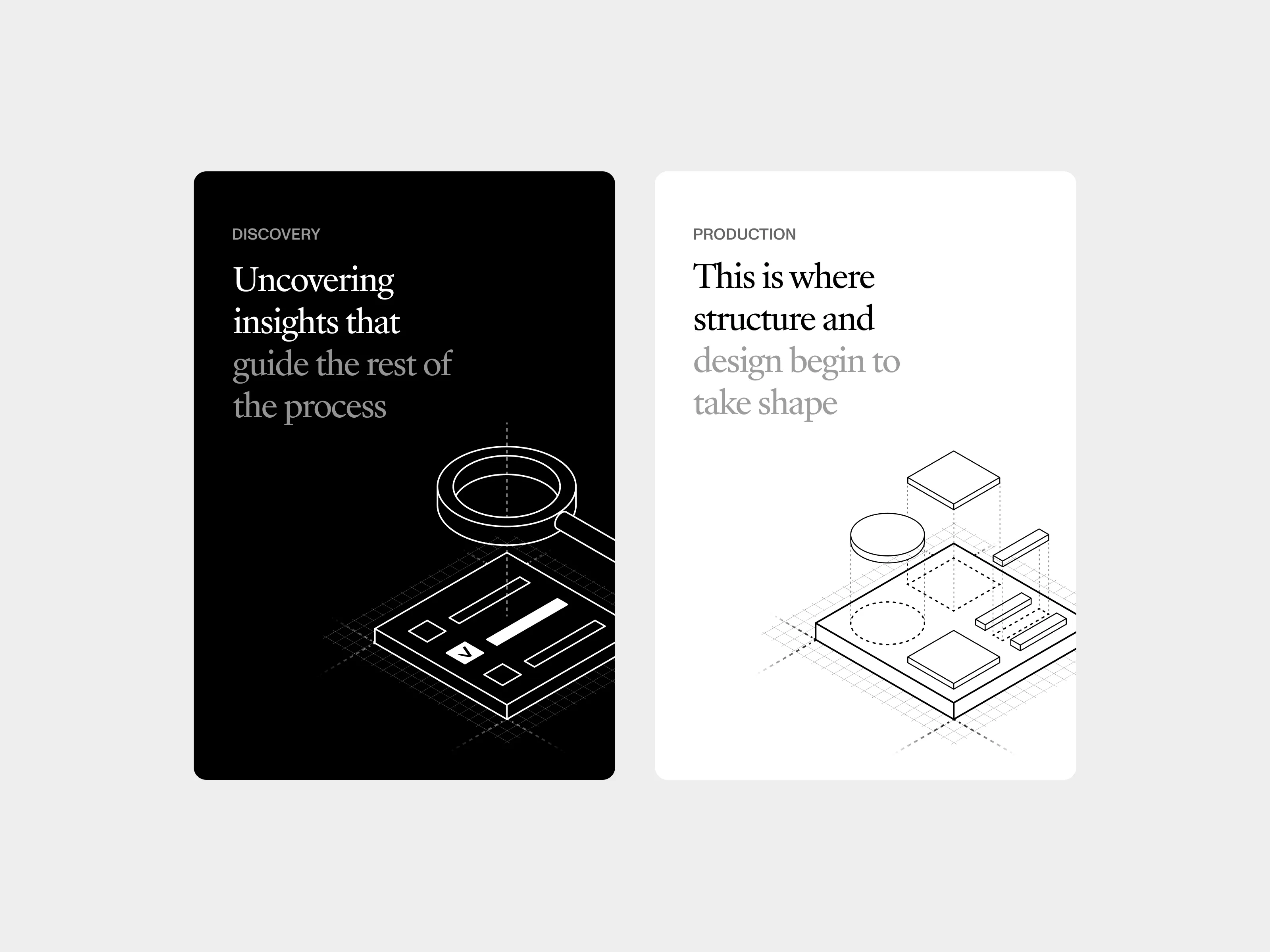
During the discovery phase, web design experts learn about your business, goals, audience, and problems. In this stage, decisions get clarity before design starts.
Planning helps define what pages you need, what content matters, and what success looks like. It also prevents scope creep and confusion later.
If an agency jumps straight into design without asking many questions, that is risky. Even a short planning phase saves a lot of time, money, and frustration later.
8. Vague Scope And Deliverables
Vagueness and assumptions are the main causes of budget and timeline problems.
If the scope is not clear, everyone imagines something different. You think a feature is included. The agency thinks it is extra. That is how conflicts start.
This is why everything should be clearly defined in the Request for Proposal (RFP). Pages, features, integrations, revisions, timelines, and support. The more specific it is, the fewer surprises you will face later.
Clear scope and deliverables protect both sides. They keep the project focused and prevent endless changes that drive up cost and delay launch.
9. Not Owning The Domain, Hosting, Or Source Files
Your domain, hosting, and source files should belong to you, not the agency. If they control these, you depend on them for every small change or move. If the relationship ends, you may lose access, face delays, or pay extra to take your website with you.
Owning your assets gives you freedom. You can switch agencies, change hosting, or manage updates without being blocked.
A good agency has no problem giving you full access and ownership. If they hesitate, that is a serious red flag.
10. Ignoring SEO From The Start
Search Engine Optimization (SEO) is built into a website, not added on top later. When a site is designed without SEO in mind, the structure is often wrong: pages are hard to find, content is poorly organized, and loading speed is slow. Fixing this later usually means rebuilding parts of the site.
SEO affects many early decisions:
- What each page is about and how it is labeled
- How headings organize and clarify content
- How information is grouped into clear sections
- How easy pages are to scan and understand
- How the site behaves on mobile devices
- How pages connect to each other logically
A website that ignores SEO can look beautiful but get no traffic. No traffic means no leads, no sales, and no return on investment (ROI).
A good web design agency thinks about SEO from the first planning session. They design pages for users and search engines at the same time. That way, the website has a strong foundation and can grow over time.
11. Not Designing Mobile First
In the second quarter of 2025, mobile devices alone accounted for about 63% of global website traffic. That means more than half of your visitors are on small screens.
If a website is designed for desktop first and mobile later, it usually feels broken on phones. Text is hard to read, buttons are too small, and forms are frustrating to fill out. And when user experience (UX) is off, people leave quickly. In fact, 88% of them never return to a website after a poor experience.
Mobile-first design means starting with the phone experience and making sure it is clear, fast, and easy to use. Then the design scales up for larger screens.
Google also ranks your site based on the mobile version first. If the mobile is weak, traffic and results suffer.
12. Overlooking Website Performance And Speed
Optimally, a website should load in 2 seconds, while 3 is also tolerable.
Every extra second hurts. Google has found that 53% of mobile visitors leave a website if it takes more than 3 seconds to load. That means over half your traffic can disappear before the page even opens.
User behavior shows the same pattern. When a site responds within one second, people stay focused and continue naturally. When loading takes more than 10 seconds, attention is lost, and users move on.
Performance is decided early. Design choices such as heavy layouts, oversized visuals, excessive animations, and cluttered pages slow sites down. Fixing speed later often means redesigning parts of the site rather than making small tweaks.
A fast website feels reliable and intentional. A slow one signals poor quality and causes users to leave before engaging.
13. Being Impressed by Jargon Instead of Clarity
A good web design agency explains complex things in simple language. They can clearly tell you what they are building, how it works, and why it matters to your business.
Clear communication matters because websites involve many decisions. Structure, content, SEO, performance. If these are not explained plainly, web design mistakes happen.
Don’t let buzzwords, marketing, and sales tactics distract you from understanding what you are actually getting. If an agency cannot explain its approach in plain terms, it is harder to judge whether its work fits your goals, budget, and constraints.
14. No Plan For Content And Structure
Content tells visitors what you do. Structure determines whether they understand it.
When content and structure are not planned together, pages feel disconnected, and users get lost. Instead of a clear path, the site becomes a set of unrelated sections that require effort to understand.
Every page should support a simple user journey:
- Navigation makes it obvious where to go next
- Above the fold explains what the page is about and who it is for
- Content is ordered to answer questions in a logical sequence
- Design highlights key actions at the moment they are needed
- Calls to action are clear, visible, and relevant to the page goal
Without this planning, users hesitate, scroll without purpose, or leave. Good content and structure guide attention, reduce friction, and make the next step obvious.
15. Skipping Post-Launch Support And Maintenance
A website does not cease to be a design asset after launch. Layouts break, components age, and content grows. New pages are added, messaging changes are made, and design consistency slowly erodes if no one is responsible for keeping it intact.
Design-related maintenance includes:
- Keeping layouts responsive as browsers and devices change
- Updating components so pages remain usable and visually consistent
- Adjusting design as content expands or new sections are added
- Preventing small visual or UX issues from accumulating over time
When post-launch design care is ignored, the site slowly degrades. What started as a clean, usable design turns into uneven spacing, broken layouts, and confusing user flows.
Final Thoughts on the Common Mistakes When Hiring A Web Design Agency
Finding the right web design agency partner can be easier and far less risky if you know what to ask, what to look for, and what to avoid.
If the process still proves overwhelming, you can rely on Dribbble’s list of vetted web design agencies. You can explore agency profiles and reach out to them directly to discuss your project.
If you prefer a more guided approach, you can submit a Project Brief instead. We’ll InstantMatch you with web design agencies that align with your needs and goals.
Written by Dribbble
Last updated